The Short Answer
What to wear to your first martial arts class is simpler than most people think: comfortable athletic clothes you can move in. A t-shirt and athletic shorts, or a fitted top and leggings. Nothing with zippers, buttons, or metal. Flip-flops or slides for walking to the edge of the mat, because shoes don't go on it.
Leave jewelry at home, trim your fingernails and toenails the night before, and bring a water bottle. That's it.
You don't need to buy a uniform, gloves, or anything else before your first class. Most good gyms — ours included — lend beginners whatever equipment the class requires. Buy gear once you know you're coming back.
Here's the detail, class by class.
What to Wear, Class by Class
The general rule covers almost everything, but each style has a few specifics worth knowing.
Jiu-Jitsu (gi classes)
Gi classes use a heavy cotton uniform — the gi — with a jacket, pants, and belt. You don't need your own for your first class. We lend gis to new students, and most quality Jiu-Jitsu gyms do the same.
Wear a fitted t-shirt or rash guard under the jacket and athletic shorts or leggings you can wear under the pants. Women typically wear a sports bra and a rash guard or fitted tee under the gi. Men often train with just shorts under the pants, but a t-shirt or rash guard underneath is completely normal.
If you're curious about the uniform question long term, gi vs no-gi Jiu-Jitsu explains the difference.
No-gi Jiu-Jitsu and wrestling
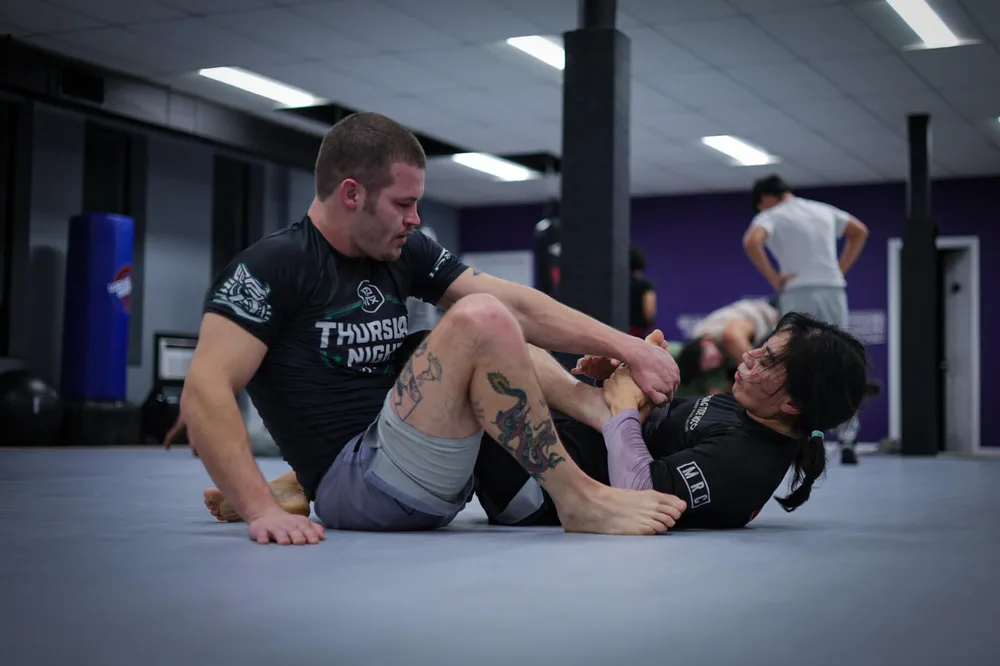
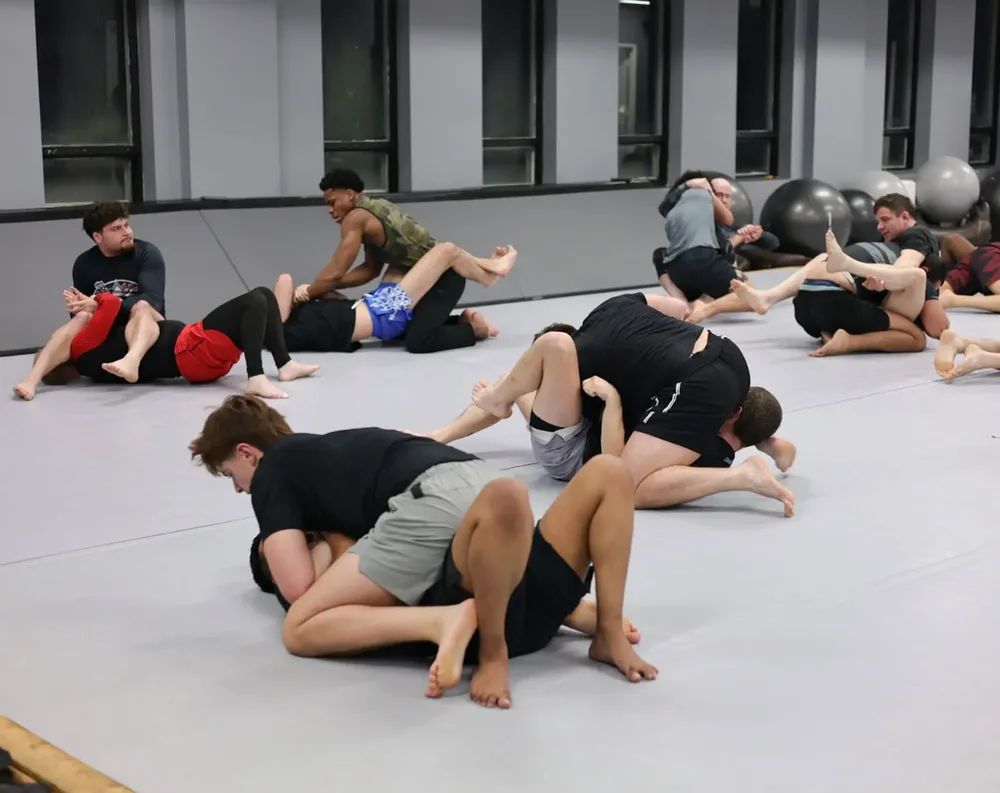
No uniform at all. Wear a fitted t-shirt or rash guard and shorts without pockets, zippers, or velcro — or leggings or compression tights.
Fitted matters more here than anywhere else. Loose basketball shorts and baggy shirts get tangled, catch fingers and toes, and ride up in uncomfortable ways when you're upside down. A snug athletic shirt and a pair of shorts with a drawstring waist will serve you far better.
Boxing and kickboxing
A t-shirt or tank top and shorts or leggings you can move freely in. For kickboxing, make sure your bottoms let you lift your knee high — tight jeans-style fits and stiff fabrics restrict kicks.
Kickboxing is usually trained barefoot on the mats. Gloves and hand wraps are the only real equipment, and gyms commonly have loaners for first-timers; we provide everything you need for our striking classes. For more on what the class itself involves, see what to expect at your first boxing class.
MMA
Dress like you would for no-gi Jiu-Jitsu: fitted shirt or rash guard, shorts without zippers or pockets. MMA classes move between striking and grappling, so clothes need to handle both kicking and rolling on the mat.
Women's-only classes
Same guidelines as above. Many women prefer leggings and a rash guard or fitted long-sleeve top for grappling, both for comfort and to avoid mat burn on the knees and elbows.
What Not to Wear
A few things cause problems in nearly every martial arts class:
- Zippers, buttons, snaps, and metal of any kind. They scratch partners, tear mats, and dig into you when someone is lying on top of you.
- Jewelry. Rings, earrings, necklaces, bracelets, watches, and piercings all come off. They catch on clothing and fingers and cause real injuries.
- Pockets. Fingers and toes get caught in them, especially in grappling.
- Very loose clothing. Baggy shorts and oversized shirts get in the way and tangle.
- Anything you'd hate to see stretched or stained. Training is hard on clothes.
- Shoes on the mat. Mats are where faces go. Shoes stay off.
- Strong cologne or perfume. You'll be very close to people.
What to Bring
- Water bottle. You'll need it more than you expect. We have a refill station on site.
- Flip-flops or slides. For walking to the bathroom and the mat edge without putting shoes on and off.
- A hair tie. Long hair should be tied back — use a soft tie, not clips or metal.
- A change of clothes. You will sweat, and the drive home is better dry.
- A small towel. Optional, but nice.
What you don't need for a first class: a mouthguard, shin guards, or a cup. Nobody spars on their first day at a well-run gym, and you'll have plenty of time to buy protective gear before you need it.
Hygiene: The Unwritten Dress Code
Martial arts is a close-contact activity, and hygiene is part of the dress code even if nobody writes it on a sign.
Trim your nails — fingers and toes — the night before. Long nails scratch partners and tear.
Wear clean clothes every single class. Don't re-wear a rash guard or gi without washing it.
Cover any cuts, and if you have a rash or skin irritation you can't identify, sit that class out and get it checked. Skin infections spread on mats, and good gyms take them seriously.
Shower after training, and ideally before evening classes too. Our academy has locker rooms and a shower on site, which makes training before work or on the way home much easier.
For our part, mats are cleaned after every session. A clean mat and clean training partners are what make close-contact training safe.
When to Buy Your Own Gear
Not before your first class. Try a few classes first, then buy what you'll actually use.
For Jiu-Jitsu: Your first purchases are usually a gi (an entry-level gi typically costs somewhere around $70 to $150), a rash guard, and possibly spats or grappling shorts for no-gi. Ask your coach before buying a gi — some gyms have color or patch preferences.
For boxing and kickboxing: Hand wraps first (they're inexpensive and personal), then your own gloves. Many coaches recommend 14 to 16 oz training gloves for bag and pad work, and 16 oz for sparring. Shin guards and a mouthguard come later, when you start partner drills with contact.
For MMA: A combination of the above, plus MMA training gloves once you begin sparring.
For everyone: A mouthguard before you ever spar. A boil-and-bite guard is fine to start.
The single best rule: ask your coach before buying anything. They'll save you from expensive gear you don't need yet.
For Kids
The same rules apply, with a few additions for parents:
- Athletic clothes with no zippers, buttons, or hoods.
- Long hair tied back with a soft hair tie or braid.
- No jewelry, including earrings.
- Trimmed nails, fingers and toes.
- A water bottle labeled with their name.
Kids don't need a uniform for their first class either; we lend gis for Jiu-Jitsu. Parents are welcome to stay and watch from our viewing area. If you're still deciding whether your child is ready, what age should kids start martial arts breaks it down by age.
Arrive a Little Early
Plan to arrive about 15 minutes early for your first adult class, or 10 minutes for kids. You'll fill out a short waiver, get a quick tour, and have time to change without rushing.
Arriving early also means you're not walking in mid-warm-up, which is the one thing that genuinely makes first classes awkward.
What to Wear to Your First Class at Rising Tide
Here's how a first class works at our academy. A coach meets you at the door, walks you through the waiver, and shows you around. Class opens with a warm-up you can do at your own pace. Then your coach breaks down a technique step by step, and you drill it with a partner matched to your level. We finish with a cool-down and introductions to the regulars.
We provide loaner gis for Jiu-Jitsu and wrestling and all the equipment you need for boxing and kickboxing. Our kids martial arts classes work the same way for ages 5 to 15. If you want the full rundown on day one in the grappling room, read what to expect at your first BJJ class. Starting later in life? Starting martial arts at 30, 40, or 50 is for you.
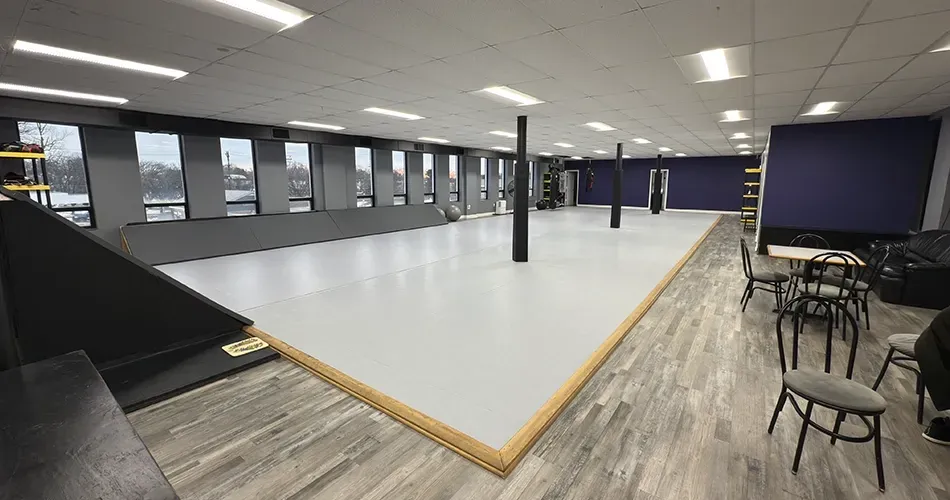
We're at 5408 Randolph Road in Rockville, second floor, with a free parking lot right in front of the building. Members come in from across Montgomery County — see the Kensington, Gaithersburg, and Potomac pages for directions and drive times.
Your first class is free. Wear something comfortable, bring water, and we'll handle the rest.
The Bottom Line
For your first martial arts class, wear comfortable, fitted athletic clothes with no zippers, buttons, or metal. Bring water and slides, leave the jewelry at home, and trim your nails.
Don't buy a uniform or gloves before you start — any good gym will lend you what you need. Once you know you're coming back, ask your coach what to buy first.
What you wear matters far less than walking through the door. That's the hard part, and it's the only part you can't borrow.
Frequently Asked Questions
What should I wear to my first martial arts class?
Comfortable athletic clothes: a t-shirt or fitted top and athletic shorts or leggings, with no zippers, buttons, or pockets. Bring flip-flops or slides, since shoes don't go on the mat, and leave all jewelry at home. Most gyms lend beginners any uniform or equipment they need.
Do I need a gi for my first BJJ class?
No. Most quality Jiu-Jitsu gyms lend gis to first-time students, and we do too. Wear a fitted t-shirt or rash guard and athletic shorts or leggings, and you can wear them under the loaner gi. Buy your own once you've decided to keep training.
Can I wear leggings to Jiu-Jitsu or kickboxing?
Yes. Leggings or compression tights are excellent for Jiu-Jitsu, wrestling, and kickboxing, as long as they don't have zippers or pockets. In gi classes, they can be worn under the gi pants. Many people prefer them because they prevent mat burn.
Do you wear shoes in martial arts class?
Usually not. Jiu-Jitsu, wrestling, kickboxing, and MMA are trained barefoot on mats, and shoes stay off the mat to keep it clean. Bring flip-flops or slides for walking to and from the mat and the bathroom.
Do I need a mouthguard for my first martial arts class?
Not for your first class. A well-run gym won't have beginners sparring on day one. Get a mouthguard before you start any live sparring or contact partner drills — a simple boil-and-bite guard is fine to start with.