The Short Answer (and Why It's Incomplete)
If you're wondering what age kids should start martial arts, here's the answer most gyms won't give you straight: ages 5 to 6 is the sweet spot for most children — but readiness matters more than the number on the birthday cake.
We've watched hundreds of kids walk onto the mats at our academy in Rockville. Some four-year-olds are ready. Some seven-year-olds aren't — yet. The age question is really three separate questions wearing a trench coat:
- Is my child physically and emotionally ready for a structured class?
- Is it ever too late for my kid to start?
- Am I starting them for the right reasons?
Let's take them in order, because getting this right is the difference between a child who trains for years and one who quits in six weeks.
Why "What Age Should Kids Start Martial Arts" Is the Wrong First Question
Here's something we tell every parent who tours our gym: martial arts is not a race, and there is no prize for starting earliest.
We've met parents who feel genuine panic that their eight-year-old is "behind" because a neighbor's kid started at four. We want to be direct with you: that neighbor's kid spent ages four and five mostly learning to stand in line and do animal crawls. Those years matter, but they are not a head start your child can't close. A focused eight-year-old routinely catches a casual twelve-year-old within a year.
The better question is: is my child ready to get something out of class right now? Here's how that breaks down by age.
Ages 4–5: The Foundation Years
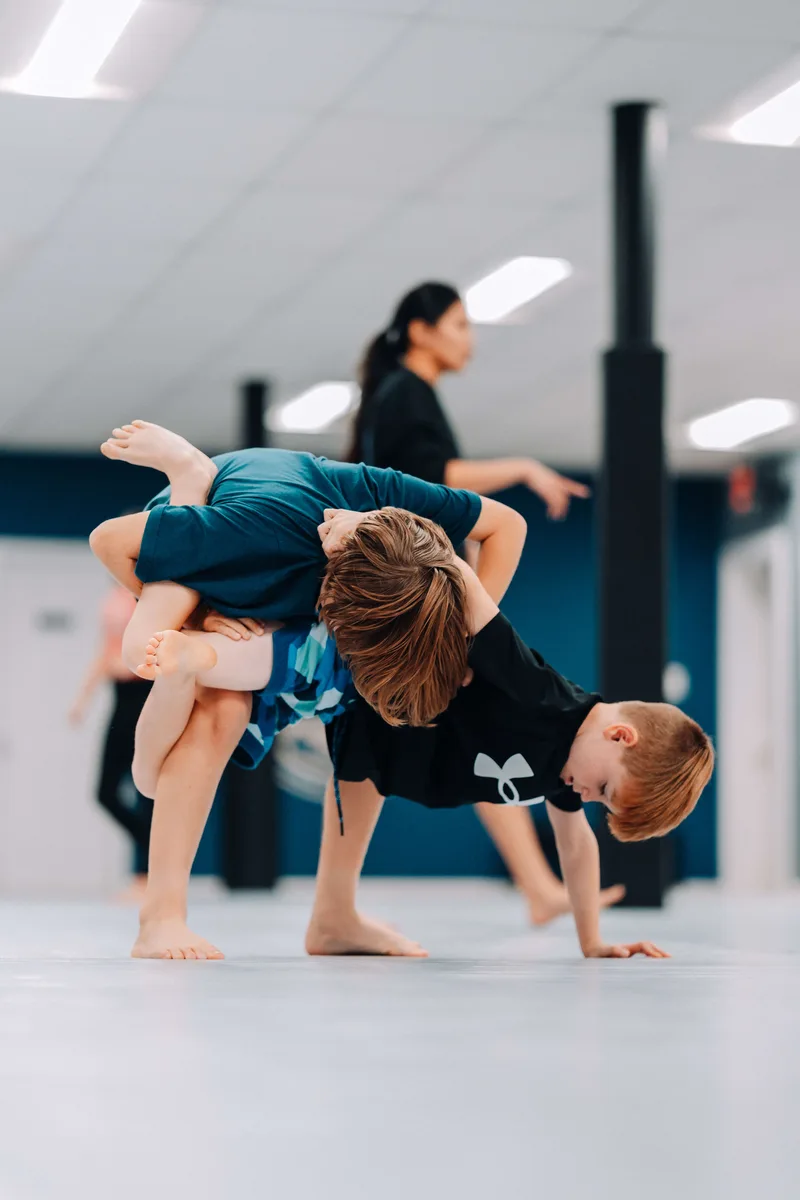
At this age, martial arts class is really movement school with structure. Kids learn to:
- Follow multi-step instructions from an adult who isn't a parent or teacher
- Take turns, wait in line, and keep their hands to themselves
- Fall safely, roll, balance, and control their bodies
- Hear "no" or "try again" without melting down
Notice what's not on that list: armbars, sparring, or anything resembling fighting. That's by design. The four-to-five window is about building the student before building the martial artist.
Signs your 4–5 year old is ready: they can sit through a story at the library, follow a two-step instruction ("grab your shoes and meet me at the door"), and separate from you for 30–45 minutes without distress.
Signs to wait six months: class becomes a chase scene every week, or drop-off tears last past the warm-up. There's no shame in waiting. Six months is an eternity of development at this age.
Ages 6–9: The Golden Window
If we could pick the single best age range to start, this is it — and it's why our kids martial arts program is built around it.
Kids in this window have unlocked the skills that make real training possible: longer attention spans, the ability to drill a technique repeatedly, and enough body awareness to learn actual grappling and striking fundamentals. But they haven't yet developed the thing that holds many older beginners back — self-consciousness.
A seven-year-old will try a new technique, fail at it in front of twelve other kids, laugh, and try again. A thirteen-year-old often needs weeks to get comfortable failing in public. That fearlessness is rocket fuel for learning.
This is also the age where the off-the-mat benefits show up fastest. Parents in our Rockville and Bethesda families tell us the same things over and over: homework arguments shrink, bedtime gets easier, and the kid who wouldn't look adults in the eye starts shaking hands with coaches.
Ages 10–12: Late? Not Even Close
Some parents apologize when they bring in a ten-year-old, as if they've missed some deadline. Let's bury that idea.
Ages 10–12 might actually be the most efficient time to start. Kids this age can:
- Understand the "why" behind techniques, not just the "what"
- Set goals and connect today's effort to next month's result
- Handle honest coaching feedback without wilting
The one real challenge at this age is social: a ten-year-old joining a class where some kids have trained for three years needs a gym culture that celebrates beginners. Ask any school you're considering how they handle new older kids. If the answer is a shrug, keep looking.
Teenagers: A Different Conversation Entirely
Teens don't need a kids program — they need purpose. A 14-year-old who chooses martial arts will outwork almost anyone in the building. A 14-year-old who was sent to martial arts will find the exit.
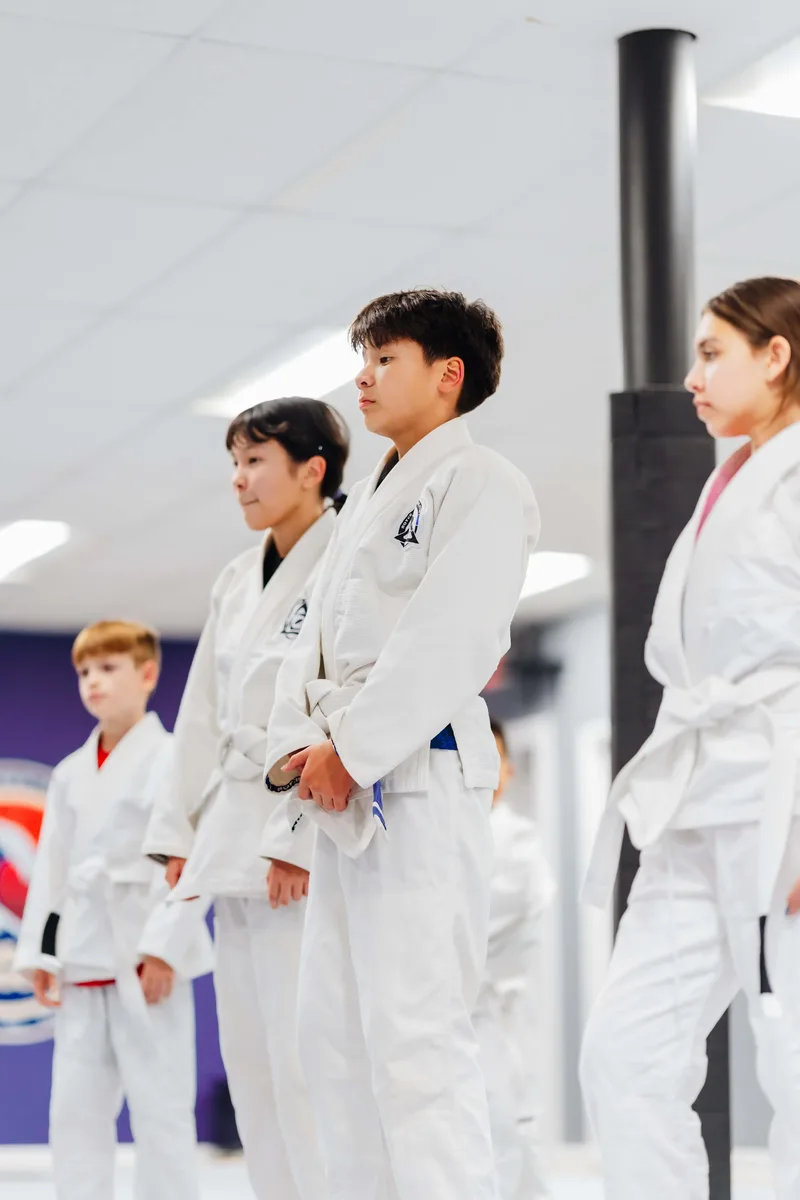
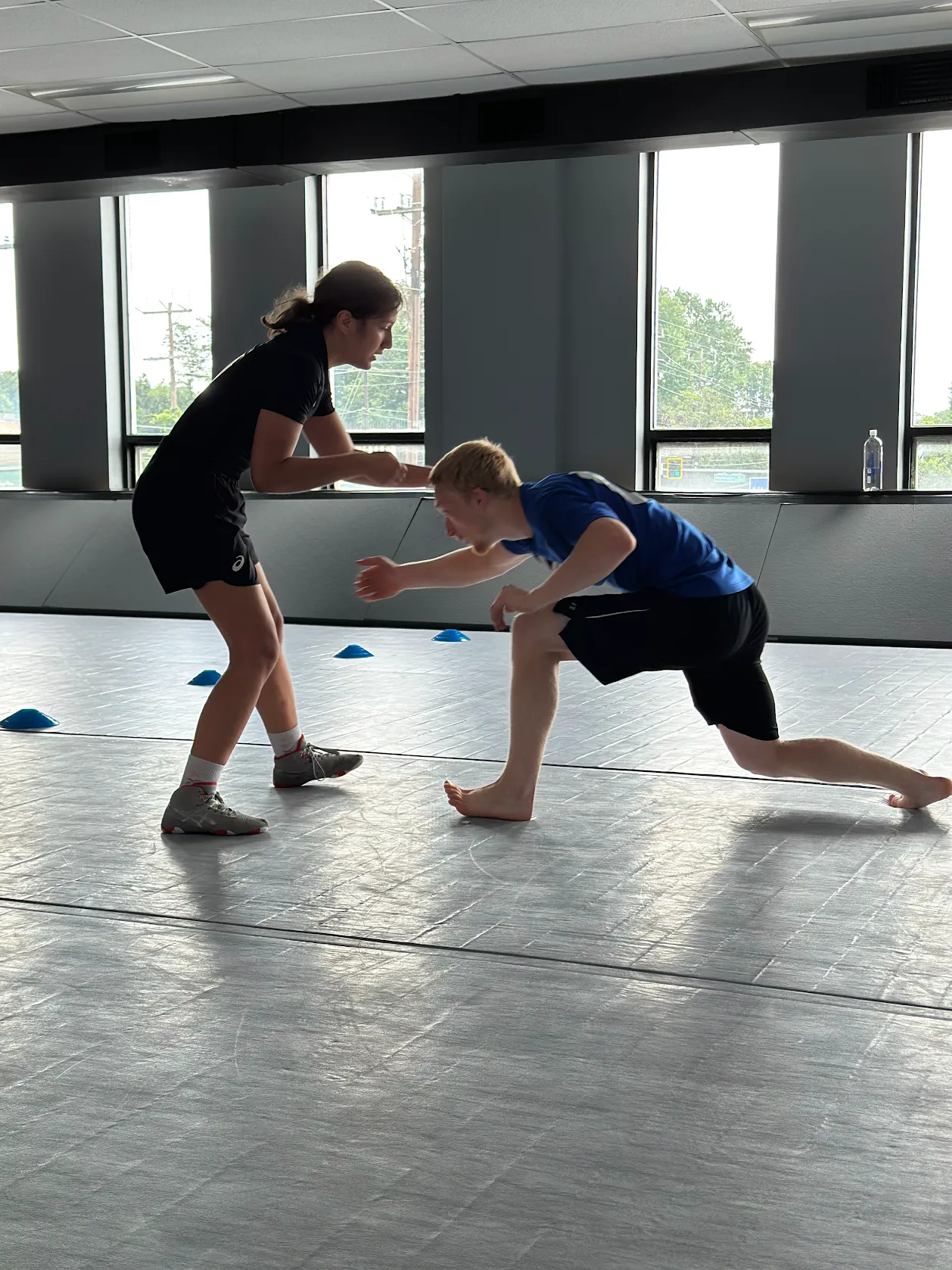
If you have a teenager, our honest advice: bring them to watch a class first, let them feel the energy in the room, and let the decision be at least half theirs. Wrestling and Jiu-Jitsu in particular give teens something rare — a place where effort visibly, measurably pays off, with zero politics about playing time.
Readiness Signs That Matter More Than Age
Whatever your child's age, these five signs predict success better than any birthday:
- They can follow instructions from a non-parent adult. Not perfectly. Mostly.
- They can tolerate frustration. Losing a game without quitting the game is the skill.
- They show interest in physical play. Wrestling with siblings and bouncing off furniture counts. That energy is raw material, not a problem.
- They can be away from you for an hour. Hovering parents make nervous students.
- You can commit to consistency. This one's about you. One class a month teaches a child that quitting mid-skill is normal. Two classes a week, most weeks, changes a kid.
The Mistakes That Make Kids Quit
After years of watching kids start, stay, and sometimes leave, the quitting pattern is almost never about age. It's about these:
Starting for the parent's reasons, framed as the kid's. If your child is being bullied, martial arts genuinely helps — we've seen the bullied kid become the confident kid more times than we can count, and it's covered in our post on why kids should train martial arts. But sell your child on the fun, not on your fear.
Treating the first month as the verdict. Almost every kid has a wobbly week three. The novelty fades before the skill arrives. Push through it like you would with swim lessons — the confidence on the other side is worth it.
Belt-chasing. If a school promises a black belt by age nine on a payment plan, that's a sales product, not a martial art. Progress should be earned and visible on the mats, not on an invoice.
So When Should Your Kid Start?
Here's the framework in one paragraph: if your child is 5–6 and shows the readiness signs, start now and let the golden window do its work. If they're 7–12, you've missed nothing — start now while fearlessness is still on your side. If they're a teen, make it their choice and get out of the way. And if they're four and full of chaos? Come try a class anyway. Coaches who specialize in young kids can tell you in one session whether it's go-time or a six-month wait.
Families from Potomac, Bethesda, Rockville, and across Montgomery County start kids with us at every one of these ages, and the first class is always free — because watching your own kid on the mats answers the age question better than any article can.
Frequently Asked Questions
Is 4 years old too young for martial arts?
For some kids, no — if they can follow simple instructions and separate from a parent for the length of a class. The training at this age focuses on coordination, listening, and confidence rather than technique. If your four-year-old isn't ready, waiting six months usually solves it.
Is 12 too old to start martial arts?
Not remotely. Kids who start at 10–12 often progress faster than younger starters because they understand instruction better and can practice with intent. The only thing that matters is starting at a gym that welcomes beginners at every age.
What's the best martial art for a young child to start with?
Grappling-based arts like Brazilian Jiu-Jitsu and wrestling are excellent first arts: they build total-body coordination, they're practiced safely against resistance, and there's no striking involved at the youth level. Our kids program blends BJJ and wrestling fundamentals for exactly that reason.
How many days a week should a kid train?
Two days a week is the sweet spot for most kids — frequent enough to build skill and routine, light enough to coexist with school and family life. One day a week works as a starting point; more than three is rarely necessary for children.
My child is shy. Will martial arts help or overwhelm them?
Shy kids are often the biggest success stories. A good kids class gives quiet children a structured way to interact, with a coach managing the social dynamics. Most shy kids stop being shy on the mats months before it shows up anywhere else.