If You're the Parent Getting the Phone Calls
You know the calls we mean. The teacher "wanted to touch base." The coach thinks your son "isn't a great fit for the team this season." The birthday party where you watched your daughter orbit the edge of the group, wanting in and unable to find the door.
Parents of kids with ADHD, anxiety, or focus struggles arrive at our gym tired in a specific way — tired of activities that were supposed to help and quietly became one more place their kid didn't fit. So before anything else, here's the message they tell us they needed to hear: the kid who bounces off walls and the kid who hides behind your leg are often our best students. Not despite how they're wired. Because of it.
That's not a slogan. Martial arts for kids with ADHD and anxiety works for specific, structural reasons — and understanding them will help you judge whether it fits your child, at our gym or anywhere else.
(One honest note up front: we're coaches, not clinicians. Martial arts complements whatever care plan your family and pediatrician have built. It replaces nothing — it adds a powerful piece.)
Why Team Sports Often Fail These Kids First
It helps to understand why the usual prescription — "sign them up for soccer!" — so often backfires.
Team sports are built on sustained divided attention. A seven-year-old in the outfield must track the ball, the runners, the coach's voice, and the social weather of teammates — simultaneously, for an hour, with action arriving maybe twice. For a child with ADHD, that's the hardest possible format: long waits, diffuse focus, and public failure when attention drifts at the wrong moment. For an anxious child, it's worse — every mistake has an audience of teammates whose game you just affected.
Now look at what a martial arts class is, structurally: one task at a time, explained, demonstrated, then immediately performed, with feedback in seconds. No outfield. No waiting three innings. No letting the team down. The format itself is the intervention.
What's Actually Happening in Class (The Mechanics)
Movement is the method, not the reward
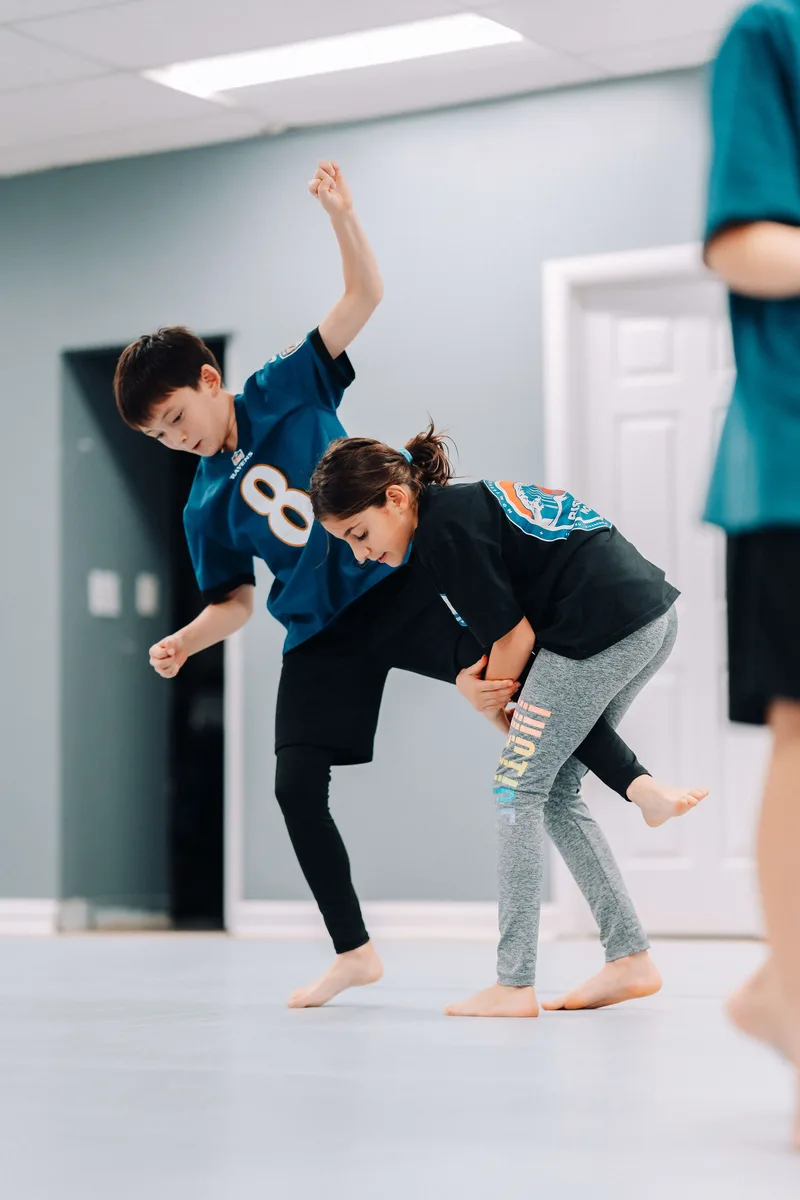
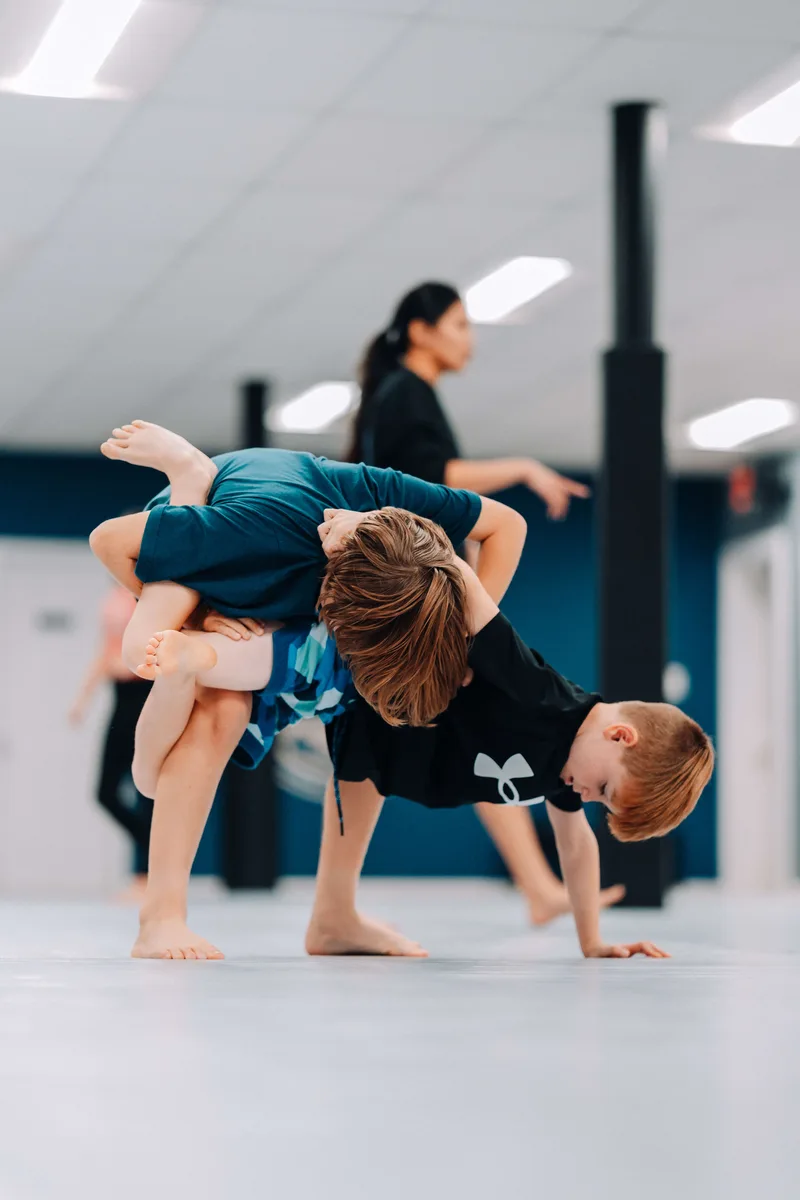
School asks kids with ADHD to sit still in order to learn. Martial arts inverts that: the learning is the moving. A child's need for intense physical input — the crashing, climbing, wrestling energy that gets them in trouble on the playground — becomes the literal curriculum. Grappling in particular delivers deep-pressure, whole-body work that many kids find genuinely regulating. Parents routinely tell us the post-class evening is the calmest of the week.
Feedback arrives in seconds, not semesters
ADHD brains famously struggle with distant rewards and delayed consequences. The mats compress that loop to almost nothing: try the technique, feel it work or fail, get a correction, try again — all within a minute. Effort and result are stitched together tightly enough for any brain to feel the connection. That tight loop is why a kid who "can't focus for five minutes" at school will drill the same takedown for twenty.
Attention gets a single channel
"Focus!" is useless advice to a child who doesn't know what to focus on. A martial arts class answers the question constantly: watch this demonstration, now grip here, now move there. Attention isn't demanded in the abstract — it's directed at one concrete target at a time, rebuilt rep by rep like the skill it actually is.
Progress is visible and cannot be taken away
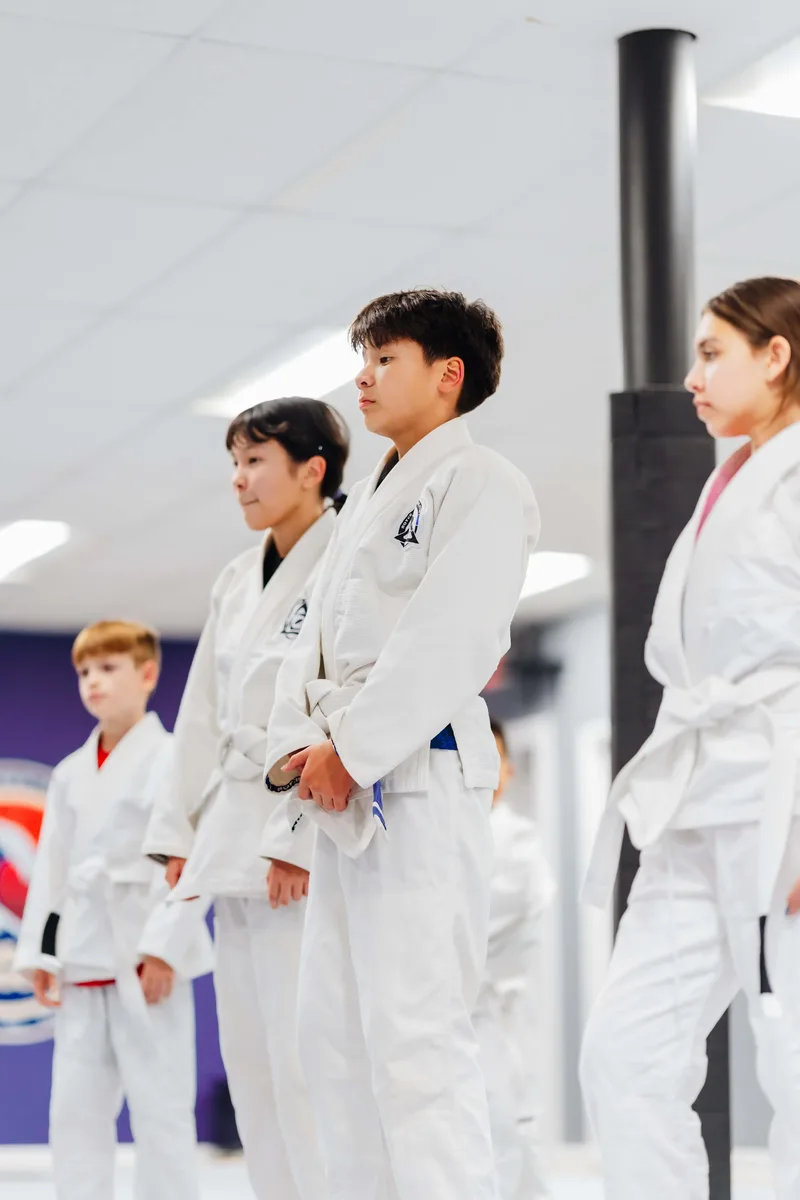
For a child who mostly hears about their deficits, the belt and stripe system is quietly revolutionary: a public, permanent record of what they can do. Nobody benches you off the progress ladder. The next stripe is always there, earned at your pace — and we make sure the pace produces real wins, because manufactured praise fools no child for long. Kids who struggle at school often defend their gym progress fiercely. It's the place where the story about them is different.
For anxious kids: courage in controlled doses
Anxiety shrinks a child's world by teaching them that discomfort means danger. Martial arts re-teaches the truth in tiny, supervised doses: discomfort is information, and it's survivable. Try the technique you might fail. Partner with the kid you don't know. Demonstrate in front of the class. Each rep of "that was scary and I'm fine" stacks into something clinicians spend years trying to build — and the child experiences it as fun. We watch shy kids find their voice on the mats months before parents see it anywhere else. (It's a big part of why we think most kids should train.)
What Honest Expectations Look Like
We promised no hype, so here are the boundaries:
The first weeks can be rocky. A child who struggles with transitions may struggle with this one. Wobbly week three is normal for every kid; give it eight to ten consistent classes before judging.
It's not discipline outsourcing. Coaches build structure for an hour; the gains compound when home and gym point the same direction. The good news: "two classes a week, most weeks" is the entire parental job description.
Coaching quality is everything. A drill-sergeant program that runs on humiliation will hurt exactly the kids we're discussing. What to look for instead: small-group attention, coaches who redirect rather than shame, and a culture where high-energy kids are channeled, not punished. Tour the class and watch how the most squirrelly kid in the room gets handled — that's your answer. (Our guide to choosing a gym has the full checklist.)
Age matters a little. Most kids with focus struggles do best starting between 6 and 9, when the format's structure can do the most good — though readiness varies kid to kid, and we covered the signs in what age kids should start martial arts.
What Parents Notice First
When it clicks — usually somewhere in months two and three — parents report a consistent sequence. First, sleep improves (intense exercise is undefeated). Then evenings get easier on training days. Then the school feedback shifts, not to perfection, but to "fewer calls." And then one day the child corrects you about something — "that's not how you do a proper handshake, Mom" — and you realize the standards from the mats came home on their own.
The deepest change is the slowest: a kid who identified as "the problem kid" or "the scared kid" starts identifying as a martial artist. Identity is the lever that moves everything else.
Trying It Without Betting the Farm
Our kids martial arts program in Rockville blends Jiu-Jitsu and wrestling fundamentals in exactly the format this article describes — high engagement, one task at a time, coaches who've taught every temperament a kid can bring. Families come to us from across Montgomery County, from Potomac to Aspen Hill, and a meaningful share of them arrived specifically because something else hadn't worked.
The first class is free, and we'd genuinely rather you watch one before deciding anything. Bring the energy. Bring the nerves. We've seen both before — they're usually our favorite students by October.
Frequently Asked Questions
Is martial arts good for kids with ADHD?
For many kids, yes — and the reasons are structural, not magical. Martial arts pairs intense physical activity with one-instruction-at-a-time teaching, immediate feedback, and visible progress markers, which is close to an ideal learning format for ADHD brains. It works best as a complement to, not a replacement for, whatever care plan your family uses.
What's the best martial art for a child with ADHD or anxiety?
Format matters more than style, but grappling arts like Brazilian Jiu-Jitsu and wrestling have an edge: constant physical engagement, no standing in lines waiting to kick a pad, and deep-pressure movement many kids find regulating. The real key is a program with strong coach-to-kid attention and a redirect-don't-shame culture.
Will martial arts make my aggressive or impulsive kid more violent?
The research and our experience point the same direction: no — structured martial arts training is consistently associated with better self-control, not worse. Kids learn that physical skills come bundled with rules, respect, and consequences, and the mats give big energy a sanctioned outlet it never had.
My anxious child refuses to try new things. How do I even get them in the door?
Lower the stakes: come watch a class together first, with zero commitment to participate. Most anxious kids need one visit to see it's safe and a second to join in. Tell the coaches in advance — good ones will give your child a soft landing, a patient partner, and an early win.
How long before we see changes at home or school?
Sleep and after-class calm often improve within weeks. Behavior and focus changes typically show up over two to three months of consistent training — roughly two classes a week. If nothing has shifted by month three, talk to the coaches; the fix is usually format or fit, not the child.