The Short Answer
The best martial arts for kids by age come down to what a child is developmentally ready for:
- Ages 3–4: Movement and listening, not real martial arts. Any well-run, play-based class is fine — and many kids are better off waiting a year.
- Ages 5–7: Play-based grappling (Jiu-Jitsu and wrestling games) or a strong kids' karate or taekwondo program. The goal is coordination, listening, and loving the mat.
- Ages 8–12: The sweet spot for technique. Jiu-Jitsu, wrestling, and judo shine because kids can practice against real resistance without strikes to the head. Striking arts work well when contact is controlled.
- Ages 13–15: Nearly everything opens up, including boxing, kickboxing, and MMA foundations with controlled, optional sparring.
Across every age, grappling arts are the most consistently good choice, because they let kids test their skills against a resisting partner safely. But the coach and the class structure matter more than the style. Here's the full breakdown.
Best Martial Arts for Kids by Age at a Glance
| Age | Best Fit | Main Goal |
|---|---|---|
| 3–4 | Play-based movement classes | Coordination, listening |
| 5–7 | Grappling games, kids' karate or taekwondo | Confidence, focus, fun |
| 8–12 | Jiu-Jitsu, wrestling, judo; striking on pads | Real technique, resilience |
| 13–15 | Any art, including boxing and MMA basics | Skill, fitness, self-defense |
What Changes as Kids Grow
Martial arts asks a lot of a child: listening to instructions, controlling their body around a partner, handling frustration, and remembering sequences. Those abilities develop on a timeline, which is why the right style shifts with age.
Attention span grows from a few minutes at 4 to sustained focus by 9 or 10. Classes for young kids have to be built around short, game-based segments.
Body control — balance, coordination, and the ability to move one limb without the others following — develops steadily through early elementary school.
Emotional regulation matters most for contact. A child needs to handle getting pinned, losing a drill, or being bumped without melting down or lashing out.
Readiness for contact is the biggest divider. Young kids can grapple safely with good supervision. Striking that involves head contact is a different matter and belongs much later, if at all.
We covered the readiness signs in detail in what age should kids start martial arts.
Ages 3–4: Movement First
At this age, honestly, the style doesn't matter. What matters is whether the class is built for preschoolers: short activities, lots of movement, simple instructions, and plenty of fun.
Many 3- and 4-year-olds aren't ready for a structured class yet, and that's normal. If your child spends most of a trial class wandering or upset, waiting six months to a year often makes the second attempt go far better. Many schools, including ours, start at age 5.
Ages 5–7: Play-Based Grappling or a Strong Kids' Program
This is where real martial arts training can begin, as long as it looks like play.
Best fits:
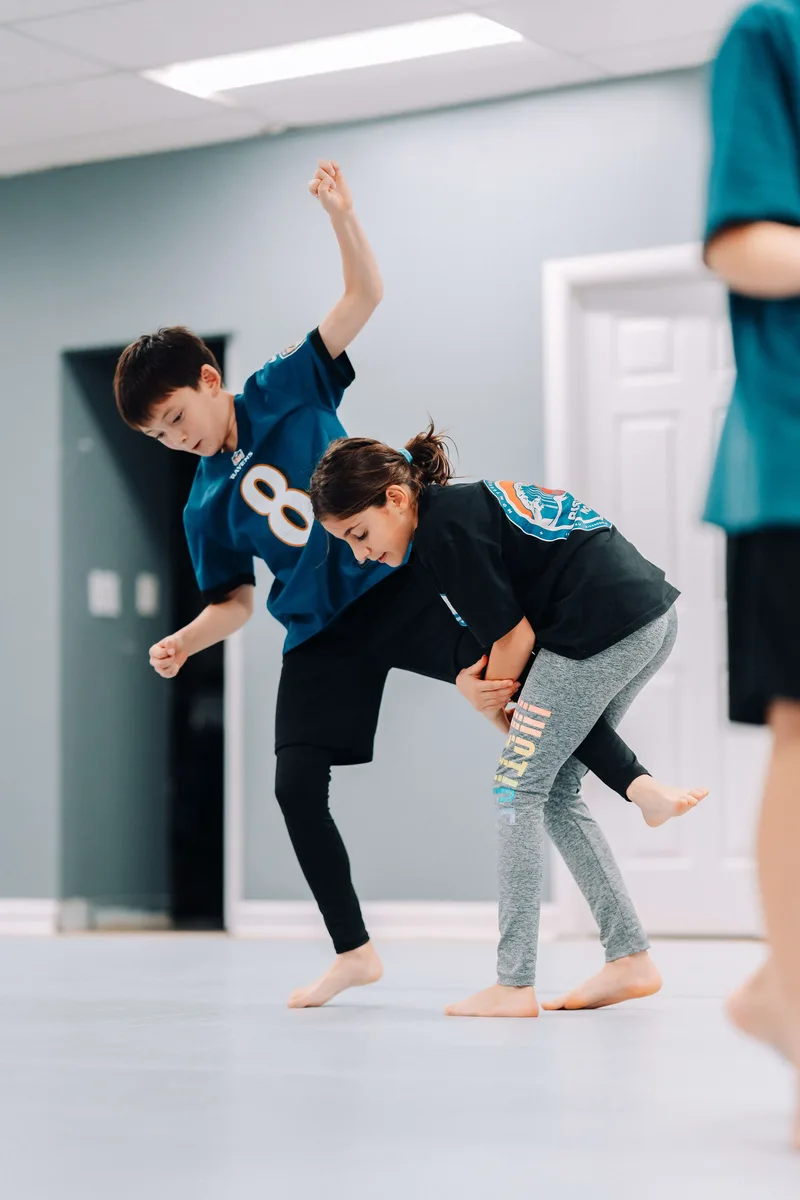
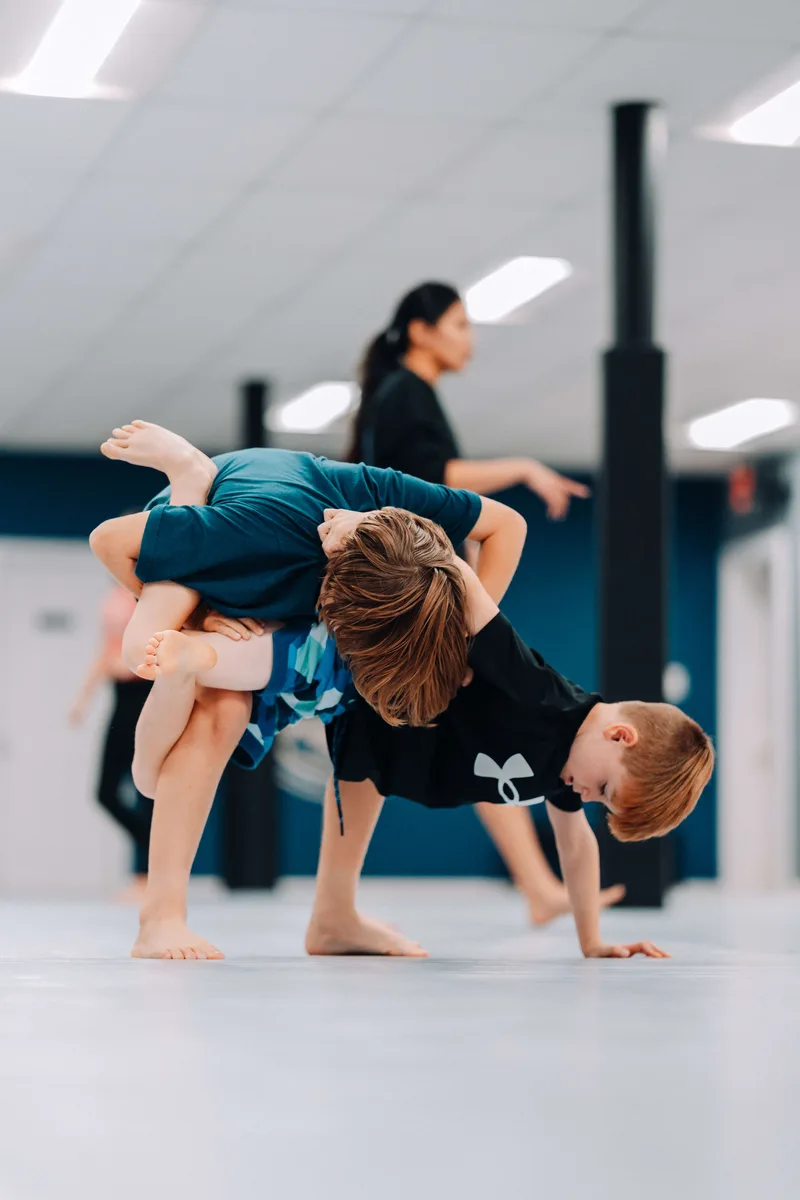
- Jiu-Jitsu and wrestling through games. Kids this age love grappling games — keeping a partner flat, escaping from underneath, "sumo" pushing contests. They're learning balance, base, and body awareness without realizing it.
- Karate or taekwondo with a well-designed kids' curriculum. These arts build coordination and listening through structured drills and forms.
What to look for: Classes that keep every child moving, coaches who get down to kid level, and plenty of positive structure.
What to avoid: Head contact of any kind, long lines where kids wait their turn, and classes run like miniature adult classes.
Ages 8–12: The Sweet Spot for Technique
This is the age range where martial arts usually clicks. Kids can follow multi-step instructions, remember techniques from week to week, and handle real resistance.
Best fits:
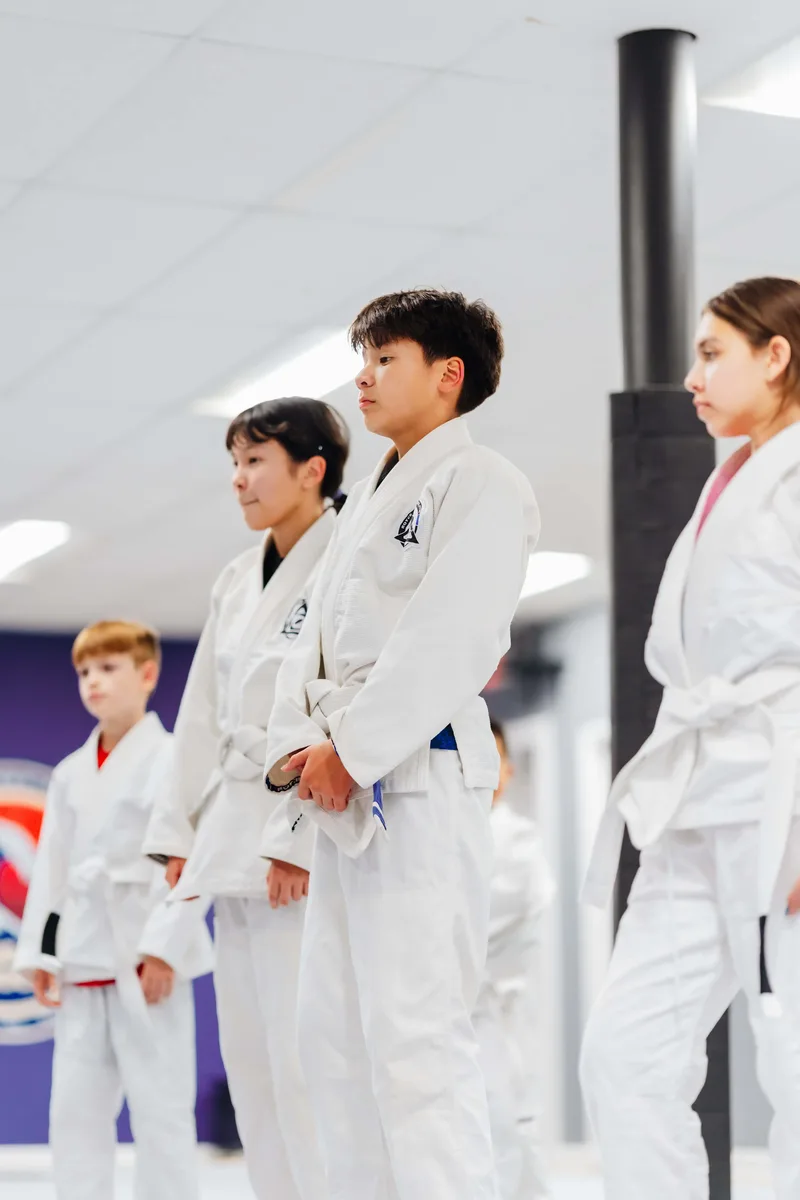
- Brazilian Jiu-Jitsu. Kids learn to control a resisting partner with leverage rather than strength, and they can practice live in a safe, controlled way. It builds problem-solving, resilience, and genuine self-defense skill.
- Wrestling. Outstanding for athleticism, toughness, and confidence. It's also a natural complement to Jiu-Jitsu. If you're weighing the two, BJJ vs wrestling compares them.
- Judo. A grappling art focused on throws and pins, with a long tradition of youth programs.
- Taekwondo and karate. Great for coordination, flexibility, and discipline, especially at schools that include partner work rather than only forms.
- Kickboxing on pads and bags. Excellent for coordination and fitness when contact is kept to pads, bags, and controlled partner drills.
What to look for: Light, supervised live training (often called positional sparring in grappling), clear belt or skill milestones, and coaches who correct kids individually.
Ages 13–15: Everything Opens Up
Teens can train almost anything, and many are ready for more intensity, more responsibility, and their first real taste of competition.
Best fits:
- Any grappling art, now with more live training and optional competition.
- Boxing and kickboxing, with sparring that is controlled, supervised, and optional.
- MMA foundations, combining striking and grappling, for teens who want the complete skill set.
What to look for: Programs that respect teens' maturity, give them leadership roles with younger students, and offer a path into adult classes when they're ready.
For teens, martial arts also does something important socially: it gives them a place outside school where effort is rewarded and status comes from showing up.
The Best Martial Arts for Kids, Style by Style
Brazilian Jiu-Jitsu — Great from age 5 up. Leverage-based ground grappling, no strikes. Exceptionally good for self-defense and resilience. Watch for: classes that are too competition-focused for young kids.
Wrestling — Great from age 5 up. Builds athleticism, toughness, and takedown skill. Very demanding physically, which many kids love. Watch for: overly intense programs that treat young children like varsity athletes.
Judo — Great from about age 6 up. Throws, pins, and a strong tradition of etiquette. An Olympic sport since 1964. Watch for: whether the school teaches safe falling thoroughly before throws.
Taekwondo — Common from age 5. Kick-focused, emphasizes flexibility and speed. An Olympic sport since 2000. Watch for: schools where belts arrive on a fixed schedule regardless of skill.
Karate — Common from age 5. Structured striking with forms (kata) and discipline. Quality and style vary enormously between schools. Watch for: programs with no partner work at all.
Kickboxing and Muay Thai — Best from about age 7–8, with contact kept to pads and controlled drills. Excellent fitness and coordination. Watch for: any head contact in young kids' classes.
Boxing — Generally best for older kids and teens. Superb fitness and footwork, but its core contact is to the head, so sparring should come later and stay controlled.
MMA — Best as a teen pursuit, built on a foundation of grappling and controlled striking. Young kids benefit more from learning the component arts first.
The Style Matters Less Than These Five Things
Research on martial arts and kids keeps pointing to the same conclusion: outcomes depend heavily on how a program is taught, not just what is taught. We summarized that research in how martial arts builds confidence in kids.
When you visit any school, look for:
- Age-appropriate groups. Five-year-olds and twelve-year-olds should not share a class.
- Every child moving the whole class. No long lines, no benching.
- Coaches who know kids' names and correct them individually.
- Earned promotions, not belts on a schedule.
- Controlled contact, with clear safety rules and no head contact for young kids.
A great karate school will serve your child better than a mediocre Jiu-Jitsu school. The best style is the one taught well, close enough to attend consistently.
And if your schedule question is really about after school, after-school martial arts programs compares classes, full programs, and daycare.
How We Teach Kids at Rising Tide
Our kids martial arts program is built around the age bands above, for kids ages 5 to 15:
- Little Warriors (5–7) learn through play-based drills and games that build coordination, listening, and comfort on the mat.
- Juniors (8–12) move into structured Jiu-Jitsu and wrestling technique and begin light positional sparring with partners.
- Teens (13–15) train with more intensity, prepare for competition if they want it, and can begin transitioning into adult classes when they're ready.
Kids train Jiu-Jitsu (gi and no-gi), wrestling, and kickboxing. Kids Gi Jiu-Jitsu runs Monday, Tuesday, and Thursday at 5:30 PM, Kids Wrestling is Wednesday at 5:30, Kids Kickboxing is Wednesday and Friday at 6:30, Kids No-Gi Jiu-Jitsu runs Friday at 5:30, and Kids Comp Jiu-Jitsu is Saturday at 11:00 AM. Sparring and competition are always optional and only happen when a child is ready.
We're at 5408 Randolph Road in Rockville, second floor, with free parking and a viewing area for parents. Families come from all over the county — see kids martial arts near Bethesda, kids martial arts near Aspen Hill, or kids martial arts near Rockville for directions and drive times.
The first class is free, and you're welcome to watch the whole thing.
The Bottom Line
The best martial art for your child depends on their age and stage. Preschoolers need movement, not martial arts. Ages 5 to 7 thrive on play-based grappling or a strong kids' striking curriculum. Ages 8 to 12 are ready for real technique, and grappling arts let them test it safely. Teens can train nearly anything, with controlled and optional sparring.
But the most important decision isn't the style. It's the school: age-appropriate groups, engaged coaches, earned progress, and controlled contact. Find that, and almost any martial art will do your child a world of good.
Frequently Asked Questions
What is the best martial art for a 5-year-old?
Play-based grappling like kids' Jiu-Jitsu or wrestling games is an excellent choice, as is a kids' karate or taekwondo program designed for young children. At this age, the class structure matters more than the style: short activities, lots of movement, and coaches who make it fun.
What is the best martial art for a 10-year-old?
Jiu-Jitsu, wrestling, and judo are outstanding at this age because kids can practice against real resistance safely, without strikes to the head. Taekwondo, karate, and pad-based kickboxing are also good choices. Look for a program with light, supervised live training and earned promotions.
What is the best martial art for teenagers?
Teens can train almost anything. Jiu-Jitsu and wrestling build self-defense and resilience, boxing and kickboxing build fitness and striking skill, and MMA combines both. Choose a program with controlled, optional sparring and a path into adult classes as teens mature.
Is BJJ or karate better for kids?
Both can be excellent. Jiu-Jitsu lets kids practice against a resisting partner without strikes, which builds practical skill and resilience. Karate builds coordination and discipline through structured drills and forms. Coaching quality matters more than the style, so visit both and compare classes.
Should kids learn striking or grappling first?
For most young children, grappling is the better starting point because it allows real, live practice without head contact. Striking on pads and bags is fine from around age 7 or 8. Many kids benefit from learning both as they get older.