Two Arts, One Argument That Never Ends
BJJ vs wrestling might be the longest-running argument in grappling — and like most long-running arguments, both sides are right about half of it.
Here's our position before we even start: we teach Jiu-Jitsu and wrestling together at our academy in Rockville because they're two halves of one complete grappling game. Wrestling decides where the fight happens. Jiu-Jitsu decides what happens when it gets there. Asking which one is better is like asking whether the engine or the wheels make the car go.
But "train both" is a destination, not a starting point. If you're standing at the beginning — picking your first art, or picking one for your kid — the differences genuinely matter. So let's compare them honestly: how they work, how they feel, what they cost your body, and who each one fits best.
What Each Art Actually Is
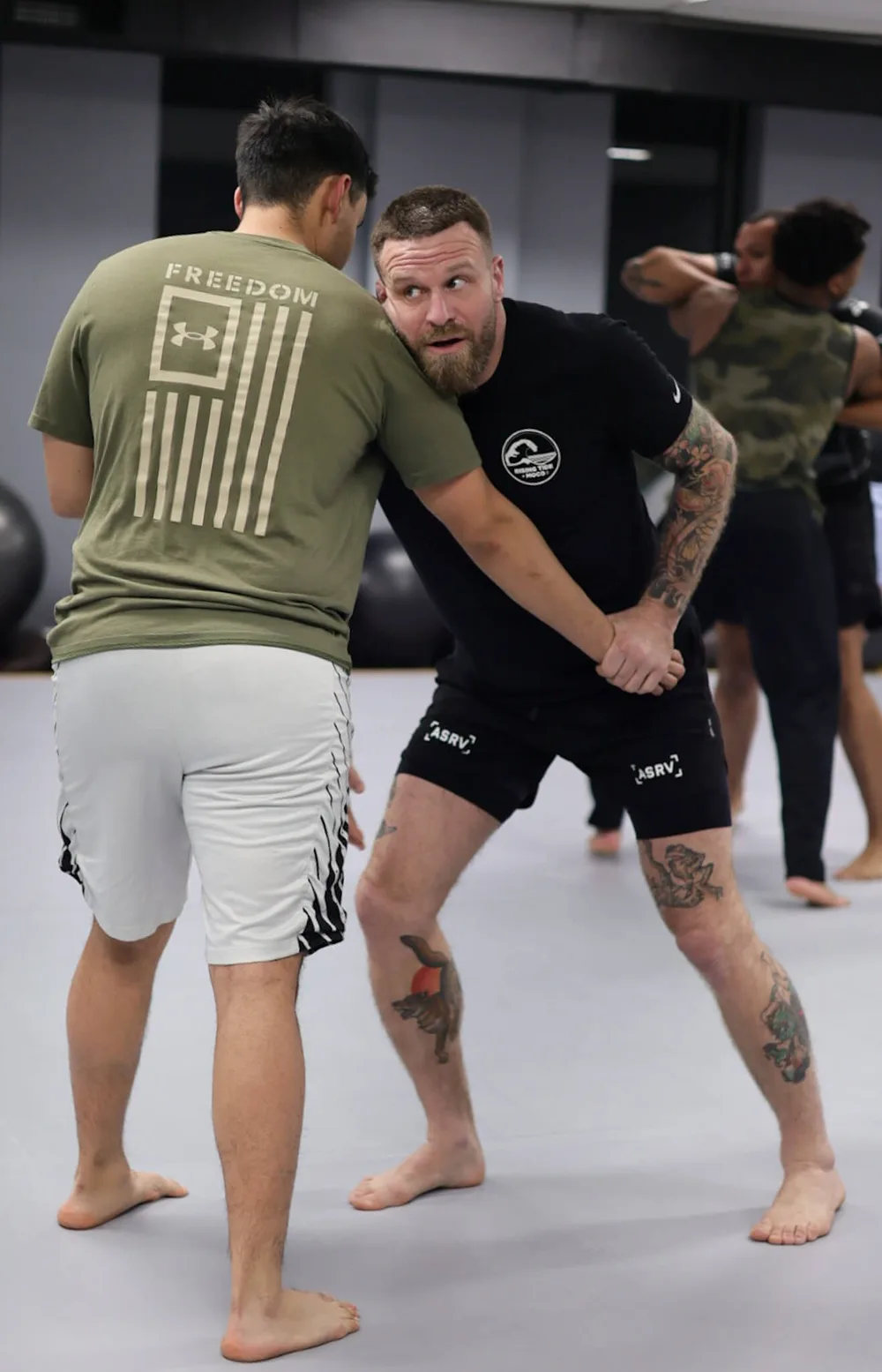
Wrestling is the art of takedowns and control. The objective is simple and ancient: put the other person on the ground and keep them there, underneath you. Everything in wrestling — level changes, shots, sprawls, scrambles, pins — serves that goal. There are no submissions. Dominance is measured in position and pressure.
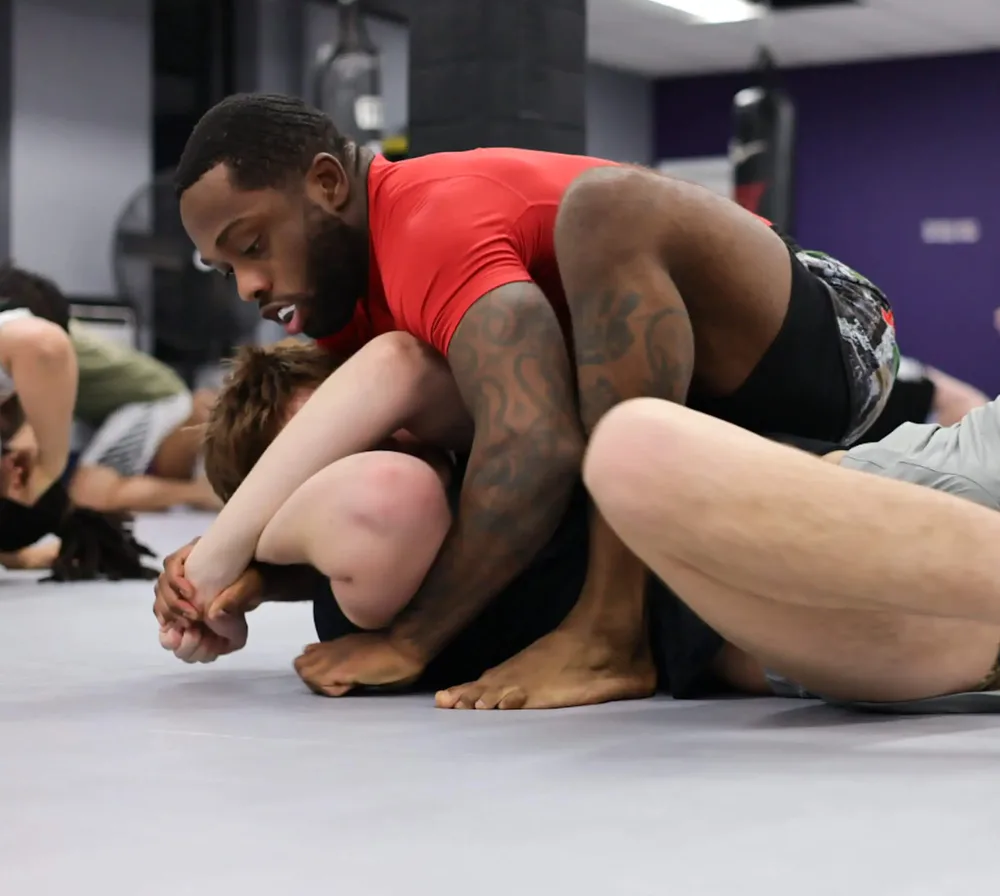
Brazilian Jiu-Jitsu is the art of what happens on the ground. Sweeps, escapes, guard work, joint locks, and chokes — BJJ assumes the fight has already hit the floor and asks: now what? Its founding premise is that leverage and technique let a smaller person survive, escape, and even finish against a bigger one.
The overlap is obvious — both are grappling, both train against full resistance, both build extraordinary conditioning. The differences are where your decision lives.
BJJ vs Wrestling: The Five Comparisons That Matter
1. Pace and intensity
Wrestling is sprint-shaped. Practices are famously hard: explosive drilling, live wrestling, conditioning that borders on legend. The art itself rewards constant forward pressure — there is no "pulling guard and thinking" in wrestling.
BJJ is chess-shaped. Rolls run longer, breathing matters more than bursting, and a sixty-year-old with good technique can genuinely hang with athletic twenty-somethings by making them play a slower, smarter game.
Neither is easy. But if you're an adult with a desk job wondering which one your body can absorb three days a week for the next decade, this difference is real.
2. The learning curve
Wrestling pays out faster. Within months, a beginner has a double-leg, a sprawl, and the ability to put most untrained people on the floor. The skills are fewer and deeper — drilled to violence-of-action sharpness.
BJJ pays out longer. The early months can feel like drowning politely: there's more to learn, positions stack on positions, and everyone taps you. Then somewhere around month four or five, the map starts making sense — and it keeps unfolding for literally decades. Black belts still learn new things. That depth is why people who start BJJ at 30 are often still training at 50.
3. Age accessibility
Here's the asymmetry nobody mentions: wrestling is mostly a young person's entry point, while BJJ has no entry deadline.
Wrestling's infrastructure lives in schools — youth clubs, high school, college. It's a phenomenal first art for kids and teens, which is why our youth program leans heavily on wrestling fundamentals. But there's no obvious on-ramp for a 35-year-old beginner, and the art's intensity profile doesn't bend much.
BJJ was practically designed for adult beginners. Walk into any academy — including ours, whether you're coming from Rockville or down MD-355 from Gaithersburg — and you'll find white belts in their 20s, 30s, 40s, and 50s, all progressing at their own pace.
4. Self-defense application
Both arts are devastatingly practical, for different phases of a confrontation.
Wrestling controls the where: a wrestler decides whether a fight stays standing or hits the ground, and against an untrained person that decision is nearly absolute. Takedown defense alone — the sprawl — may be the single most useful self-defense skill in existence, because it keeps you on your feet and able to leave.
BJJ controls the what now: if you're grabbed, pinned, or taken down, Jiu-Jitsu is the system that gets you out and back to your feet. We covered this in depth in Is BJJ good for self-defense? — short version: the ground is where untrained people panic, and BJJ deletes that panic.
Notice these are sequential, not competing. Which is the whole point.
5. Culture and feel
Wrestling rooms run on discipline and shared suffering — earned toughness, team identity, coaches who demand everything. It builds a particular kind of character that wrestlers carry for life, and employers and teammates can spot it from across a room.
BJJ rooms run on community and problem-solving — more conversational, more cross-generational, with training partners dissecting positions between rounds like study groups. People stay for the people.
Neither culture is better. But one of them will fit your personality (or your kid's) better, and the right fit is what keeps someone training past year one.
So Which Should You Choose?
Choose wrestling first if: you're a kid, teen, or young athlete; you want the fastest path to physical dominance and takedown skill; you thrive on intensity and team culture; or you're building toward MMA, where wrestling is the sport's most proven base.
Choose BJJ first if: you're an adult beginner; you want an art you can still be improving at in twenty years; you're smaller and want leverage on your side; or your priority is self-defense composure rather than competition.
Choose both if: you can. This isn't diplomatic fence-sitting — it's how modern grappling actually works. Wrestling without BJJ has no answer once the fight hits the ground and goes past the pin. BJJ without wrestling lets the opponent decide where the fight happens. Together, they close each other's biggest hole.
That's why our classes chain them deliberately: takedown, to top control, to submission — one continuous skill instead of two rival ones. Students who train the blend develop a grappling game with no obvious gap, and they develop it faster than specialists who bolt on the second art years later.
What a Blended Week Actually Looks Like
Since "train both" is the recommendation, here's what it looks like in practice on our actual schedule (the full week is on our schedule page):
Adult Jiu-Jitsu, almost any day. BJJ classes run most weekday mornings at 6:30 AM, at noon, and every evening — plus Saturday morning. This is your technical foundation: positions, escapes, attacks, drilled with a partner.
Wednesday night — the grappling double. Adult Jiu-Jitsu at 6:30 PM flows straight into Adult Wrestling at 7:30 PM. Takedown entries, sprawls, and scrambles taught at adult pace — all the skill of a wrestling room without the high-school-tryouts conditioning culture. Back-to-back, it's the single best night of the week for a complete grappling game.
Friday night or Sunday morning — open mat. Live rounds that chain everything together: start standing, fight for the takedown, work the ground, stand back up. The two arts stop being separate subjects and become one continuous game.
Three sessions, about four total hours a week, and both halves of your grappling develop in parallel. Students who train this way for a year typically out-grapple two-year specialists from single-discipline rooms — not because they worked harder, but because nothing in their game has a hole where the other art should be.
The Real Answer to BJJ vs Wrestling
The honest conclusion: wrestling wins the takedown argument, BJJ wins the longevity and ground argument, and the debate itself mostly exists on the internet. On actual mats, the two arts merged years ago — every serious grappling competitor cross-trains, and every serious gym teaches both.
If you're still unsure which fits you, there's a faster method than reading comparisons: come feel the difference. Take a free class, drill a takedown, roll a light round, and your body will cast a more informed vote than any article. (First time on the mats? Here's exactly what to expect.)
Frequently Asked Questions
Is BJJ or wrestling better for beginners?
For adult beginners, BJJ is usually the smoother entry: the pace is more adjustable and academies are built around adult white belts. For kids and teens, wrestling fundamentals are arguably the best first grappling base. The ideal program for either age blends both.
Does wrestling beat BJJ in a real fight?
Between two trained people, the wrestler usually controls where the fight happens and the BJJ player has the advantage once it's there — which is exactly why the question dissolves at gyms that teach both. Against an untrained person, either art is an overwhelming advantage.
Is wrestling harder than BJJ?
Wrestling practices are generally more physically punishing, especially the conditioning. BJJ is harder in a different way — the sheer volume of technique can feel overwhelming for the first few months. Pick your difficulty: burning lungs or a full brain.
Can I start wrestling as an adult with no experience?
Yes — in the right setting. Adult wrestling-for-grappling classes (like ours) teach takedowns, sprawls, and scrambles in a controlled format without the brutal competition-team pacing. It's one of the best things an adult BJJ student can add.
Which is better for my child, BJJ or wrestling?
You don't have to pick. A good kids program teaches both — wrestling's takedowns and toughness with BJJ's control and problem-solving — and lets your child's natural style emerge. That blend is exactly how we structure our youth classes.