The Problem With Most Women's Self-Defense Classes
Let's start with an uncomfortable truth about the self-defense industry: most women's self defense classes are designed to make you feel safer for an afternoon, not be safer for a lifetime.
You know the format. A two-hour seminar. An instructor demonstrates a wrist release on a volunteer who isn't really gripping. Everyone practices on a cooperative partner, everyone cheers, everyone goes home with a certificate and a keychain.
Here's the question that format never answers: what happens when the other person actually resists?
Because real resistance — real weight, real grip strength, real chaos — is the entire problem self-defense is supposed to solve. A technique that has never been tested against someone genuinely trying to stop you isn't a skill. It's a hope. And hope is a terrible safety plan.
There's a better way, and it wasn't designed by a marketing department. It was designed, a century ago, around one specific problem: how does a smaller, weaker person survive against a bigger, stronger one?
Why Jiu-Jitsu Was Practically Built for This
Brazilian Jiu-Jitsu's founding premise sounds like it was written for women's self-defense, because functionally it was: leverage, angles, and technique defeat size and strength.
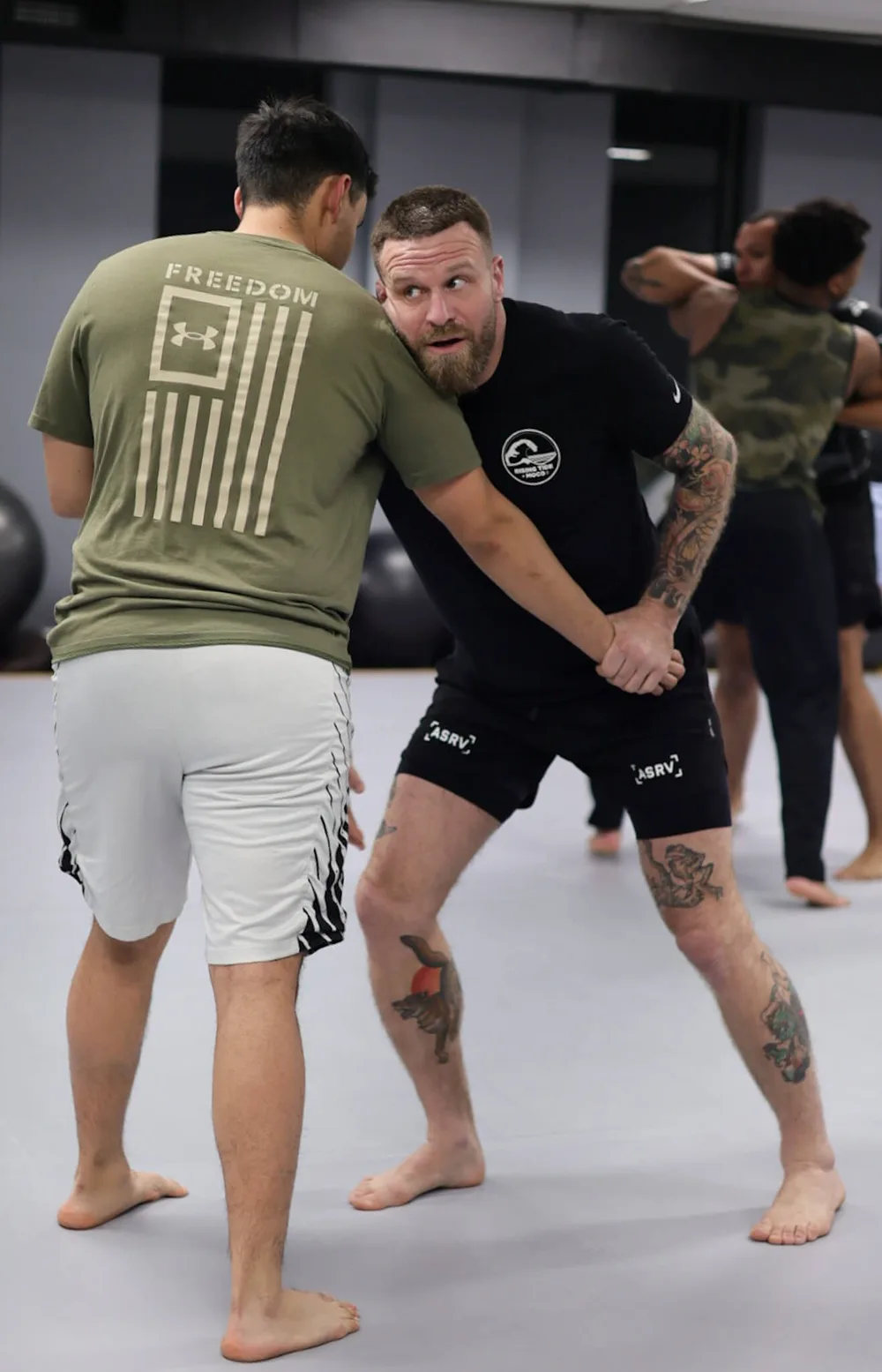
The art was developed by people who were not the biggest or strongest in the room and needed answers anyway. Every core technique reflects that origin. You don't muscle out of a pin — you create a frame, shift your hips, and make your attacker's weight work against him. You don't out-grip a grab — you attack the thumb side, break at the weak point, and angle away.
This matters for one blunt reason. In a confrontation between a woman and a male attacker, there is usually a size and strength gap. Any self-defense system that quietly relies on matching force — most striking-heavy seminars do — has a fatal flaw built in. Jiu-Jitsu is the system that starts from the assumption you're the smaller person. That's not its weakness. It's the entire design spec.
And there's a second, harder truth Jiu-Jitsu addresses head-on: many assaults against women involve grabbing, pinning, or being taken to the ground. These are horrifying scenarios to think about — and they are, position for position, exactly what Jiu-Jitsu training teaches you to escape. The place an untrained person panics is the place a trained grappler has been hundreds of times, in a safe room, with a coach, and knows the way out.
What Pressure-Testing Actually Gives You
The difference between Jiu-Jitsu and a seminar isn't the techniques — some seminars even teach decent ones. The difference is that in Jiu-Jitsu, you practice against real resistance every week. Grapplers call it rolling, and we covered why it changes everything in Is BJJ good for self-defense?
For women specifically, that ongoing practice builds three things no one-day event can:
Calibrated confidence. Not pep-talk confidence — tested confidence. You know you can escape a pin because you escaped one on Tuesday, against a training partner who was honestly trying to hold you. Your nervous system has receipts.
Composure under adrenaline. The first time someone pins you in training, panic rises — and then, week by week, it stops. You learn to breathe, think, and work the problem with weight on you. That trained calm is the single biggest predictor of how anyone performs under real stress.
A body that's stronger every month. Grappling is a full-body workout disguised as problem-solving. Strength, cardio, flexibility — they accumulate as side effects while you're busy learning.
There's a quieter benefit, too, and women in our program name it more often than any technique: boundaries get easier everywhere. Something shifts when you've spent months calmly handling physical pressure. Saying no — at work, in relationships, on a sidewalk — comes from a different, steadier place.
"But I Could Never Walk Into a Grappling Gym"
Every woman on our mats said some version of this first. The gym intimidation is real, and the standard advice — "just show up!" — ignores it.
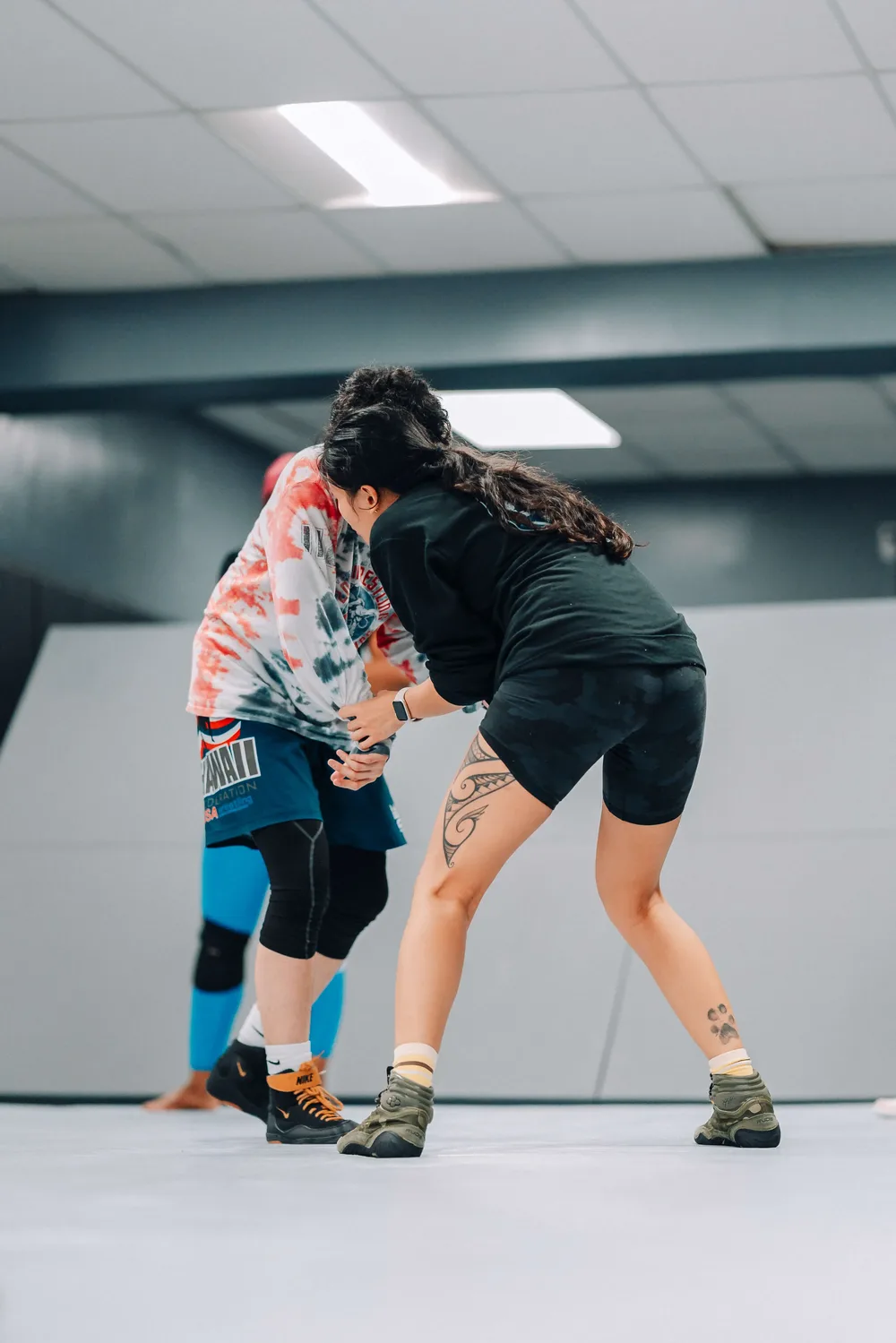
So we removed the barrier instead. Our women's-only Jiu-Jitsu program is exactly what it sounds like: women training with women, coached by instructors experienced in women's training, in a room where nobody has to manage anyone's ego or explain why they're nervous.
What that room feels like in practice: beginners are the norm, intensity is dialed to each pair of partners, questions are encouraged mid-drill, and the culture is closer to a fiercely supportive study group than anything you're picturing when you hear "MMA gym." Women from Rockville, Bethesda, Kensington, and across Montgomery County train together, and the friendships are half the reason people stay.
And it's a starting point, not a fence. Some women stay women-only forever — great. Others build confidence there and add co-ed classes later — also great. Your training, your pace, your call.
What the First Three Months Typically Look Like
Our women's-only classes run twice a week — Tuesday and Thursday evenings at 6:30 PM, one no-gi and one gi session — and they anchor the women's track of our broader self-defense training. Every student progresses at her own pace, but a typical first three months unfolds something like this:
The first month: foundations. Safe falling, base positions, your first escapes — including the wrist-grab and collar-grab releases that seminars teach, except drilled correctly and then tested against real grips.
The second month: the ground, demystified. Escaping mount, framing against pressure, getting back to your feet safely. This is the material that quietly retires old fears.
The third month: live training begins. Controlled positional rounds with partners you trust, introduced when you're ready — never before. The first time you escape a fully resisting pin, something permanent changes. We've watched it hundreds of times and it never gets old.
No experience needed, no fitness prerequisite, nothing to bring but athletic clothes. The conditioning builds itself.
How to Evaluate Any Women's Self-Defense Program
Whether you train with us or somewhere else entirely, hold any program you're considering to these four standards:
Resistance is on the syllabus. Ask directly: "Will I practice these skills against a partner who's genuinely resisting?" If the answer involves the words "eventually," "advanced students," or a subject change, the program is theater. Progressive resistance — light at first, real within months — is non-negotiable.
The techniques assume you're smaller. Watch a class. If the escapes rely on yanking free or out-muscling a grip, they were designed for someone else's body. Leverage-based technique looks different: angles, frames, hip movement, attacking weak points of a grip rather than fighting its strength.
You'd actually come back. The best system on earth is worthless at one visit. Culture, schedule, drive time, and how the room makes you feel are not soft factors — they're the factors that determine whether you're still training in month six, which is when the real capability arrives.
It teaches avoidance proudly. Any program that skips awareness, boundaries, and de-escalation to get to the flashy stuff has its priorities inverted. The instructors worth your time say it plainly: the fight you avoid is the one you win.
The Real Goal Isn't Fear. It's Freedom.
Here's what we believe, and it shapes how we teach: the goal of women's self-defense isn't to make you think about danger more. It's to let you think about it less — because preparation quietly replaced worry.
The parking garage, the late run, the rideshare: trained women don't walk through the world scanning for threats. They walk through it with the settled calm of someone who has spent real hours solving physical problems under pressure and knows, rather than hopes, what she's capable of.
A keychain can't give you that. A seminar can't either. A few months on the mats genuinely can — and the first class is free.
Frequently Asked Questions
What's the best self-defense class for women?
Look for three things: techniques built on leverage rather than strength, regular practice against genuinely resisting partners, and an environment where you'll actually keep showing up. Brazilian Jiu-Jitsu — especially in a women's-only format — checks all three, which one-day seminars and cardio-kickboxing classes don't.
Do I need to be fit or athletic to start?
No. Every drill scales to your current level, and fitness is a byproduct of training, not an entry requirement. Our women's classes include complete beginners of every age and body type.
Are one-day women's self-defense seminars worth it?
As awareness-builders, they have some value. As skill-builders, very little — physical skills that haven't been practiced against resistance don't survive real stress. If a seminar sparks your interest, treat it as a doorway into ongoing training rather than a finish line.
Will I have to train with men?
Not unless you choose to. Our women's-only Jiu-Jitsu classes are exactly that, taught by coaches experienced in women's training. Many members later add co-ed classes by choice; plenty happily don't.
How long until I could actually defend myself?
Honest answer: you'll have usable escapes from the most common grabs within your first month or two, and meaningfully reliable skills within several months of consistent training. The composure benefits — steadier nerves, stronger boundaries — start almost immediately.