The Short Answer
Yoga for martial artists is one of the best investments you can make in your training — but the benefit isn't really flexibility, at least not the kind most people picture. Nobody needs the splits to pass a guard or land a body kick.
What yoga gives martial artists is usable range of motion you can control, a trained ability to breathe calmly under discomfort, and a structured way to recover from the pounding that martial arts puts on your hips, back, and shoulders. Those three things make you more effective, and more importantly, they keep you healthy enough to keep showing up.
Here's how each one works, and how to add yoga without wrecking the rest of your training week.
Flexibility vs Mobility: The Distinction That Matters
These words get used interchangeably, but they mean different things.
Flexibility is passive range — how far a joint can move when something else moves it. Someone pushing your leg toward your head while you lie on your back is testing flexibility.
Mobility is active range — how far you can move a joint under your own control and strength. Lifting your own leg to head height and holding it there is mobility.
Martial arts runs almost entirely on mobility. A head kick requires you to lift your leg high with control and balance. Guard retention requires you to rotate your hips and pull your knees in under pressure. A sprawl requires you to extend your hips explosively and land balanced.
This is where yoga earns its place. Unlike passive stretching, most yoga poses are held under your own bodyweight, with muscles working to support the position. A long, low lunge isn't just stretching your hip flexors — it's training your legs to be strong at a range they rarely visit. That's mobility.
What Martial Arts Does to Your Body
Training is wonderful for you. It also creates predictable patterns of tightness and wear, because it asks your body to repeat the same shapes thousands of times.
- Hips: Fighting stances, wrestling stances, and guard work all keep the hips flexed and loaded. Tight hip flexors and limited hip rotation are among the most common complaints of long-time martial artists.
- Upper back: A boxing guard and a grappling posture both round the upper back forward. Over months, that rounded shape becomes your default.
- Lower back: Bridging, sprawling, and being stacked in guard all load the lower back, especially when the hips and upper back don't move well enough to share the load.
- One-sided patterns: Most people fight from one stance and prefer one side for their guard and takedowns. The body adapts unevenly.
None of this is a reason to train less. It's a reason to give your body something that moves it in the opposite directions, through full range, at least once a week.
Yoga for Martial Artists: What It Gives Each Art
Yoga for Jiu-Jitsu
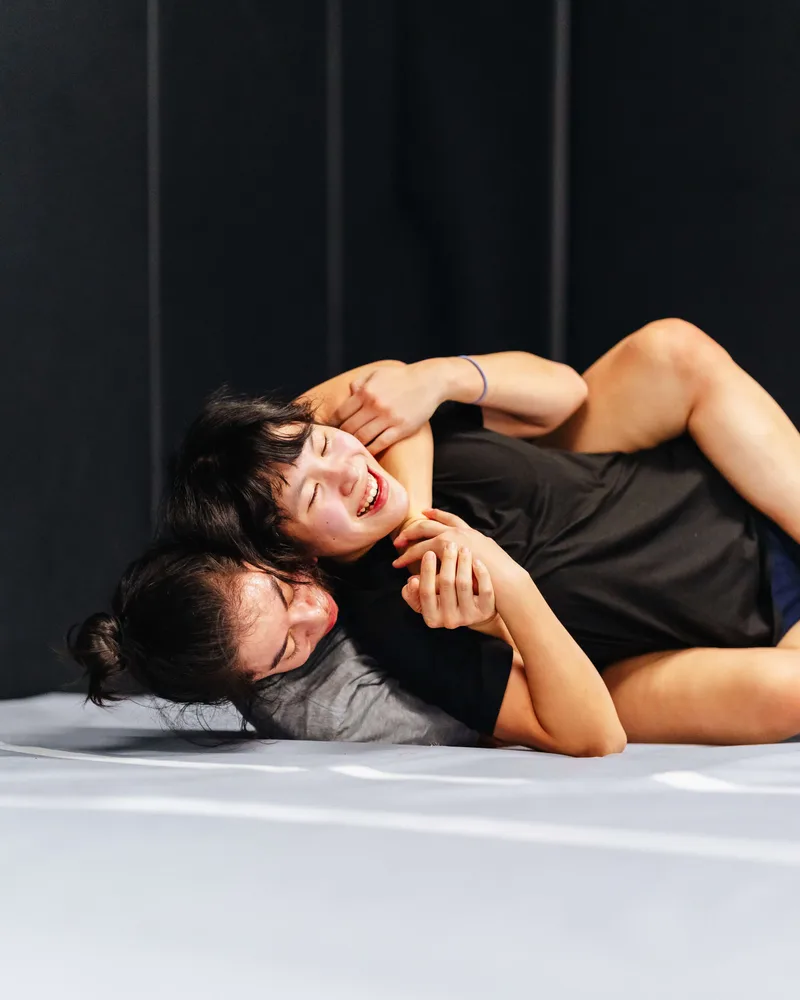
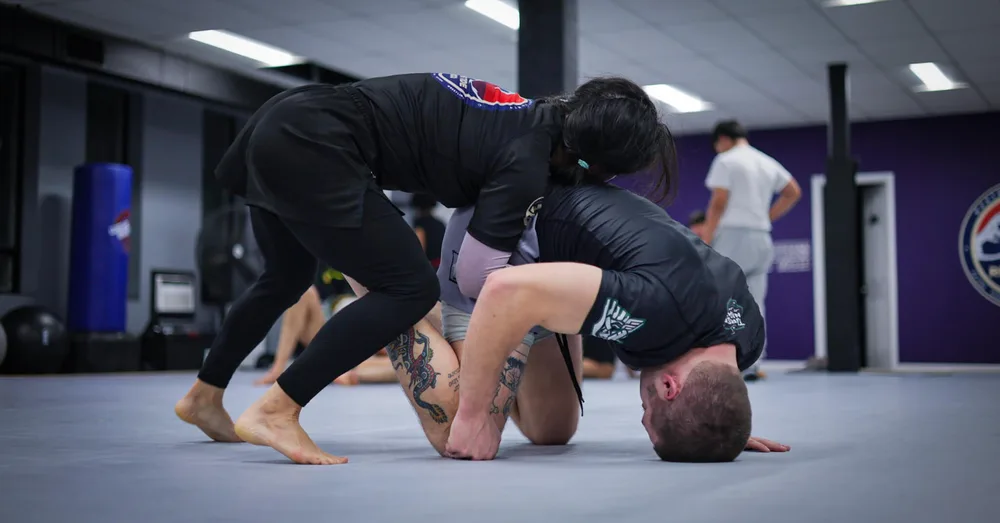
Jiu-Jitsu asks more of your hips than almost any other sport. Guard retention depends on rotating your hips and getting your knees and feet back between you and your opponent. Players with stiff hips get passed; players with mobile hips are slippery and exhausting to pass.
Yoga's hip openers — pigeon, lizard, deep lunges, and seated rotations — directly target the internal and external rotation a guard player needs. Spinal twists help the upper back rotate, which makes it easier to turn, shrimp, and come up on an elbow. And the bridging poses mirror the bridge escape you'll use from bottom mount.
Yoga for Kickboxing and Muay Thai
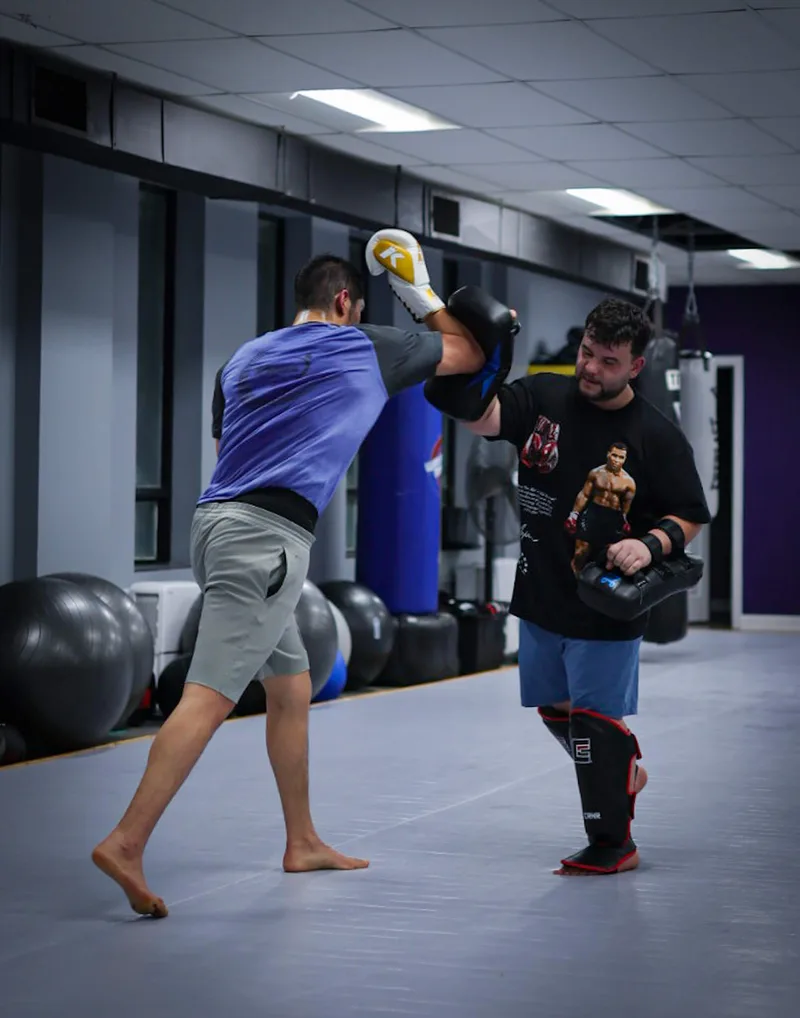
Kicking is a balance and hip-mobility problem. To kick high with power, you need hip flexors and hamstrings that let your leg rise, glutes strong enough to drive it, and a standing leg stable enough to stay upright when the kick lands — or gets checked.
Standing yoga poses train exactly that. Single-leg balances build ankle and hip stability. Warrior poses build strength in long, wide stances. Lunges open the hip flexors that tighten from hours in a fighting stance. Many strikers find their kicks get higher and more balanced within a couple of months of regular yoga, without any extra kicking.
Yoga for Wrestling
Wrestling lives in deep positions: low level changes, penetration steps, sprawls, and bridges. If your hips and ankles don't reach those positions comfortably, your body compensates — usually through the lower back or knees.
Deep lunges look a lot like a penetration step. Bridges and back-bending poses build the hip extension behind a good sprawl. Hip and ankle mobility let you get low without collapsing. For more on why wrestling matters so much in combat sports, see wrestling for MMA.
Breath Control: The Most Underrated Benefit
Ask any coach why beginners get exhausted in their first sparring rounds, and they'll tell you the same thing: they stop breathing.
Under pressure — a heavy opponent in side control, a flurry of punches — untrained people hold their breath or take quick, shallow gasps. Their heart rate spikes, their muscles tense, and they burn through their energy in a minute or two.
Yoga trains the opposite reflex. Holding an uncomfortable pose while breathing slowly through your nose is the same skill as staying calm under someone's weight on the mat: this is uncomfortable, and I'm fine. Slow breathing with long exhales is one of the best-studied ways to settle the nervous system, and practicing it in a quiet room makes it far easier to find when you're pinned and your instinct is to panic.
Many grapplers say breathwork was the single thing that most improved their endurance. Not more running. Better breathing.
What Yoga Can and Can't Do for Injuries
Here's the honest version, because yoga gets oversold.
Research on stretching as injury prevention is genuinely mixed. Stretching alone is not an injury vaccine, and nobody should promise you that yoga will keep you from ever getting hurt. Long, deep static stretches right before explosive training can also temporarily blunt your power, which is why it's better to save the deep work for after training or a separate day.
What yoga can do is real, though:
- It gives you margin. When a partner forces you into an awkward position, the joint that already moves comfortably in that range is under less strain than the one at its absolute limit.
- It builds strength at end ranges, which is where many training injuries happen.
- It makes you notice problems early. A weekly session that moves every joint tells you when something's off before it becomes an injury.
- It's active recovery. Gentle movement and breathing on a rest day help many people feel fresher for the next hard session.
The biggest benefit is indirect: staying healthy keeps you consistent, and consistency is what makes martial artists good. As we wrote in how long it takes to get a BJJ blue belt, the people who progress are the people who keep showing up.
Yoga for Martial Artists: The Six Poses That Matter Most
If you only learn a handful of poses, make it these:
- Low lunge (crescent lunge): Opens the hip flexors that tighten from fighting stances and guard work. Hold each side for several slow breaths.
- Pigeon (or a figure-four stretch on your back): Hip external rotation for guard players and kickers.
- Downward dog: Hamstrings, calves, and shoulders in one position — and a good check on how your body is feeling that day.
- Thread the needle: Upper-back rotation to undo the rounded posture of a boxing guard and grappling.
- Bridge: Hip extension for bridging escapes and sprawls, and a counterbalance to all that forward rounding.
- Warrior III or tree pose: Single-leg balance and hip stability for kicking and checking kicks.
Move into each one gently, never force a joint, and back off anything that causes sharp pain. If you're carrying an injury, tell the instructor before class so they can give you modifications.
How to Add Yoga Without Wrecking Your Training
Once a week is enough to start. One full session reliably moves the needle for most martial artists. Two is great. More than that only makes sense if it replaces something, not if it's piled on top of an already-full week.
Put it on a rest day or after training. A yoga class the morning after your hardest sessions works beautifully. Avoid long, deep stretching right before sparring or explosive drills.
Don't chase range when you're exhausted. Tired muscles protect joints less effectively. Gentle is fine on heavy weeks.
Bring the breath back to the mat. The next time you're stuck under side control, practice the slow exhale you learned on Sunday. That's where the transfer happens.
Yoga at Rising Tide
We have yoga classes right on the schedule, which makes the recovery habit easy to keep. Yoga runs Sunday at 9:00 AM, all levels welcome, with a focus on functional movement, deep stretching, core strength, and breathwork — not twisting into impossible shapes. Our instructor gives modifications for every pose, so stiff grapplers and complete beginners fit right in.
Many members use Sunday yoga as the reset at the end of a week of Jiu-Jitsu and wrestling or boxing and kickboxing. On the first Sunday of each month, the adult open mat follows at 11:00 AM.
We're at 5408 Randolph Road in Rockville, second floor, with free parking out front and showers on site. Members come from across Montgomery County — see the Cabin John, Glen Echo, and Bethesda pages for directions and drive times.
Your first class is free, and no flexibility is required.
The Bottom Line
Yoga for martial artists isn't about becoming flexible for its own sake. It's about building range you can actually use with strength and control, learning to breathe calmly when things get uncomfortable, and giving your body a weekly counterbalance to the shapes martial arts drills into it.
It won't make you injury-proof, and nobody honest will tell you it does. But it will make you move better, gas out later, and stay healthy enough to keep training — which, over years, is the thing that matters most.
One session a week. Start this Sunday.
Frequently Asked Questions
Is yoga good for martial artists?
Yes. Yoga builds usable mobility in the hips, spine, and shoulders, improves balance for kicking, and trains slow, calm breathing that transfers directly to sparring. It also serves as active recovery between hard sessions. Most martial artists benefit from even one class per week.
How often should martial artists do yoga?
Once a week is enough to notice real benefits within a couple of months. Twice a week is ideal for people with stiff hips or a history of back issues. More than that should replace other training rather than add to an already full schedule.
Should I do yoga before or after martial arts training?
After training or on a separate day is best. Long, deep static stretches immediately before explosive work can temporarily reduce power. A short, dynamic warm-up is better before training; save the deeper yoga work for a rest day or a session after you're done.
Does yoga help with BJJ?
Significantly. Jiu-Jitsu demands hip rotation for guard retention, spinal rotation for escapes, and calm breathing under pressure — all things yoga trains directly. Many grapplers find their guard becomes harder to pass and their endurance improves within a few months of regular practice.
Can yoga prevent injuries in martial arts?
Not on its own, and the research on stretching for injury prevention is mixed. But yoga builds strength at end ranges, gives joints margin when you're forced into awkward positions, and helps you notice problems early. Combined with smart training and rest, it supports staying healthy.